A Chania cooking class is a hands-on lesson in Cretan home cooking, followed by a shared meal. This post covers the day, the food of Crete, the dishes, the White Mountains setting and the booking rules. The homepage lists more Greece Tours for Crete and the islands.
Every Chania cooking class card below opens a live GetYourGuide booking. Pickup points and group sizes are shown on each card.
What is a Chania cooking class and how does the day run?
Guests on a Chania cooking class travel from Chania to a family farm in the White Mountains. They cook with local hosts, then eat what they made. Pickup, a garden stroll and emailed recipes come with the small-group format.
A day on a Chania cooking class starts with pickup. On the small-group White Mountains class, an air-conditioned minivan collects guests from specified locations within Chania. Pickup from other regions of Crete is not part of that listing, so the starting point is the city itself. The same class ends with a drop-off.
Planning to visit Turkey as well? The homepage also lists Turkey tours for the coast and the cities.
Formats differ in how the day begins. One small-group listing sends guests to selected meeting points in Chania. Another listing, an afternoon class, sends a driver to the hotel in Chania. It ends with a return to the hotel. Each listing states its own pickup rule.
One more small-group listing offers pickup from select locations within the Chania region. The exact time and place are confirmed after booking. English-speaking instructors lead that class, and the group is kept small for a more personal setting. It is described as a fit for food lovers and culture seekers.
The afternoon format names its pickup area: hotel transfers cover Chania and the coast as far as Maleme. The minivan then drives to a family farm in the White Mountains. The ride leaves time to chat with the guide. There the hosts welcome the group, share stories and let guests feed the sheep.
The small-group White Mountains class opens in the vegetable garden. Guests stroll round the garden to get a feel for the raw produce and learn about the herbs. The same listing adds a mountain walk to a shepherd’s enclave, where guests hear how olives are harvested.
Guests on a Chania cooking class work with local experts and learn their cooking methods. The class is hands-on: guests help with tasks in the kitchen and prepare a traditional meal themselves. Back at the house the group stops for a tasting and prepares more food before the meal.
The meal closes the class, and the time of day depends on the format. One small-group listing ends with lunch. The afternoon format ends with dinner, served in the family home. Drop-off is included, so the group returns to Chania by minivan. On the afternoon format the return falls in the evening.
Next on this subject: Naxos Cooking Class.
The private farmhouse class is a separate format. It lasts six hours. A chauffeured drive leads south from Chania to a farmhouse in the White Mountains, where the hosts give a welcome. Guests walk the garden to pick vegetables and herbs, and the talk turns to Cretan customs such as weaving. A return drive ends the day.
A second private format fills a whole day. The day starts with pickup in Chania, where the group meets a private driver and guide. The cooking class is the third stop, after an olive mill and a winery. The day ends with a family-style lunch on a terrace. That format lasts eight hours.
The small-group class is family-friendly and suitable for children. The afternoon format suits families who like outdoor, hands-on activities. Friends and solo travellers on a Chania cooking class share the tasks, which makes it easy to connect. The small-group class also suits travellers who enjoy hands-on cultural activities. The private class is listed for all ages.
Groups stay small: the afternoon format takes up to twenty travellers. That format is offered in English, and the small-group class includes a local English-speaking driver and guide. Recipes and photos from a day on a Chania cooking class arrive by email afterwards. One small-group listing adds commemorative gifts.
The site also covers Santorini Cooking Class.
Why does Cretan food belong to a Chania cooking class?
Cretan food rests on olive oil, wild greens, herbs, cheese and honey. More than 150 wild plant species and subspecies appear in Cretan dishes. Cooks who work during a Chania cooking class draw on that local pantry.
Olive oil is the basic building block of Cretan recipes. The Minoans used it as their main cooking fat, and olive groves are still a significant part of island farming. In the old Cretan diet it supplied the main fat, in salads and in the pan. Northern European diets leaned on animal fat instead.
Wild greens come second. The Greek word horta means simply greens, and it covers black mustard, dandelion, wild sorrel and chicory. Stamnagathi, a local plant of the Cichorium genus, gives its name to a Cretan salad. The food cooked during a Chania cooking class belongs to this tradition of gathered leaves.
Crete has a rich variety of native herbs, among them sage, rosemary, thyme and oregano. Wild herbs and aromatic plants were eaten in great amounts and formed the base of old Cretan cooking. Cretan dittany is a rare herb that grows wild only on the mountainsides and gorges of the island. The cultivated plant is used for herbal tea.
Dairy foods were eaten daily in the old Cretan diet, in low to moderate amounts. Cheese and yogurt can replace meat in Cretan cooking. Graviera Kritis is made from sheep’s milk and ripened for at least five months. It carries an EU protected designation of origin. Meals prepared during a Chania cooking class draw on the same dairy tradition.
Chania comes up again in Chania Olive Oil Tour.
Honey is the last of the five. The quality of Cretan thyme honey is linked to the island’s high altitudes, dry climate and rich flora. Beekeeping on Crete is thousands of years old, and the Minoans also domesticated bees. Thyme honey stands beside olive oil, citrus fruits, wine, herbs and wild greens among the island’s local products.
UNESCO lists the Mediterranean diet as intangible cultural heritage. It first inscribed the diet in two thousand and ten, on a nomination from Spain, Greece, Italy and Morocco. The entry covers skills and traditions from crops to cooking, and it stresses eating together. Cretan cooking, taught during a Chania cooking class, forms part of the Greek share of that heritage.
Crete has a place in nutrition research. Ancel Keys directed the Seven Countries Study, which started in nineteen fifty-eight with middle-aged men in sixteen groups. Keys said that the men at lowest risk of cardiovascular disease lived on Crete. The traditional Cretan cuisine stayed widespread on the island until the nineteen sixties.
The old Cretan table followed the seasons. People ate seasonal products from the local area, with little or no processing. Wild greens change with the area and the season. On a traditional Cretan table, different dishes were set out for hosts and guests to share. Cooking from local produce during a Chania cooking class follows the same habit.
Chania also features in Chania Catamaran Cruise.
Which dishes come out of a Chania cooking class?
Ntakos, tzatziki and kalitsouni are the three dishes named for the White Mountains class. They are a rusk salad, a yoghurt starter and a small pie. After a Chania cooking class group has cooked them, the table also holds Cretan wine and traditional jar desserts.
Ntakos is a salad built on a hard barley rusk, soaked in water or olive oil until it softens. After a Chania cooking class group has soaked the rusk, the topping goes on. On the White Mountains class, that topping is tomatoes, olives and feta. The Anogeia and village classes teach the same salad as dakos.
Tzatziki starts from strained yoghurt, which is mixed with cucumbers, garlic, salt and olive oil, plus red wine vinegar. Dill, mint, parsley or thyme can season it. On the White Mountains class, guests blend aromatic herbs and spices into the dish. It is served cold, as a meze, a side dish or a sauce.
Salty kalitsounia from Chania are small pies stuffed with mizithra, a mild whey cheese. Other pies use herbs and no cheese. On the village class, guests roll out dough and fill the pies with cheese and wild greens. After a Chania cooking class cook has filled the dough, the pies can be baked or fried.
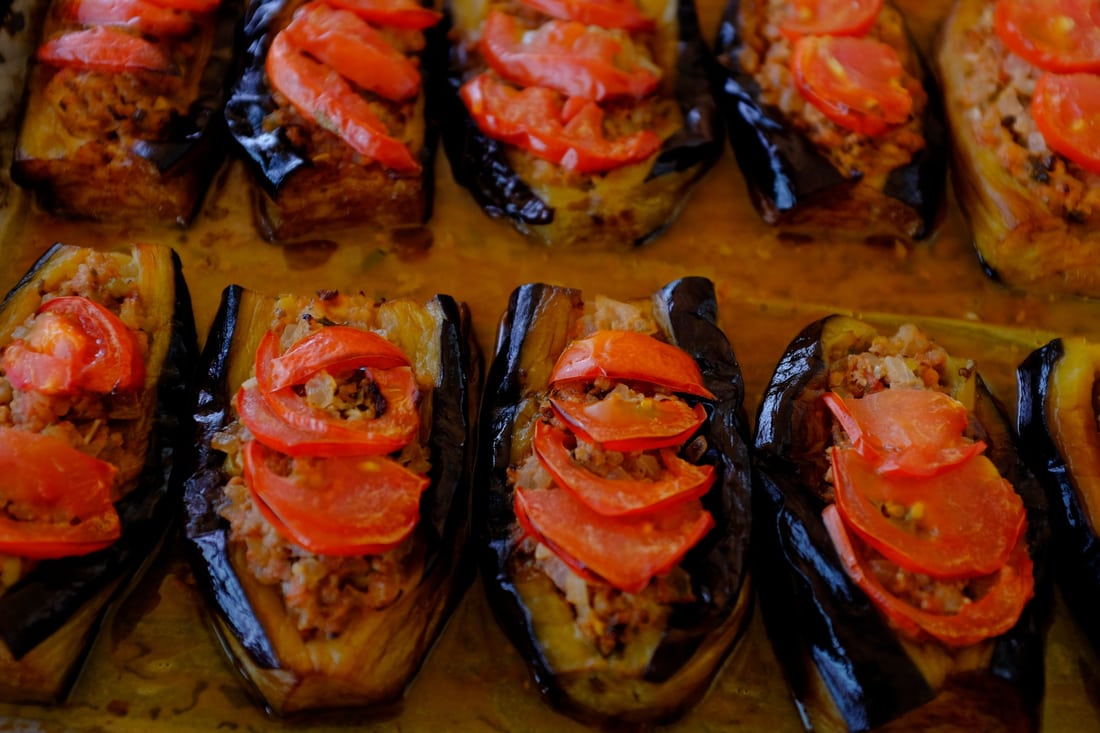
The village class near Chania turns to stuffed dishes. Guests learn to roll grape leaves for dolmades, and they gather herbs from the garden to fill vegetables. Bell peppers, one stuffed vegetable, are hollowed and filled with rice, herbs, onions and currants. Gemista is the Greek word for such stuffed dishes.
Compare this with Lasithi Plateau.
The small-group class at Anogeia has a different centre. Its main dish is gemista, a traditional Greek recipe, and dakos and tzatziki are the starters. Guests pick vegetables and join a hands-on cooking lesson. Local cheese goes on the table beside the dishes, together with Cretan wine.
On the village class, a traditional lamb dish roasts in the wood-fired oven while guests whip up the starters. The appetisers there include a Cretan salad beside the dolmades and tzatziki. The White Mountains class names its ingredients as extra virgin olive oil, local meats, aromatic herbs and freshly picked vegetables.
Meat-free guests have a place at these tables. The White Mountains class offers vegetarian and gluten-free menu options. Gemista on the Anogeia class is described as a dish that pleases both vegetarians and meat eaters. Ntakos rests on rusk, tomatoes, olives and feta, and tzatziki rests on yoghurt and cucumber.
The meal closes the White Mountains class with wine pairings and traditional jar desserts. After a Chania cooking class lesson, the cooks sit down to a meal of their own making. In Chania, the sweet kind of kalitsounia holds mizithra, with honey poured on top.
The rusk for ntakos is paximadi, a hard bread of Greek origin, made with whole wheat, chickpea or barley flour. Traditionally the bread was sliced thickly and put back in the oven to dry, which preserved it. Garlic and sea salt can be rubbed on the rusk. Dried oregano seasons the finished salad.
A neighbouring topic is Imbros Gorge.
In kalitsounia, the whey cheese is grated and mixed with eggs, so that the filling holds together. Finely chopped herbs go in with it. Dolmades are stuffed vine leaves, and the dish requires grape leaves. In Greece, tzatziki is eaten with pita bread, olives, fried aubergine, courgette or other vegetables.
Wine is the drink of the White Mountains meal, and guests taste a selection of Cretan wines. The village class pours local wine with the meal and adds a shot of raki among its welcome refreshments. Raki, or tsikoudia, is a pomace brandy distilled from what remains of pressed grapes. It is served chilled from a freezer.
Where in the White Mountains does a Chania cooking class take place?
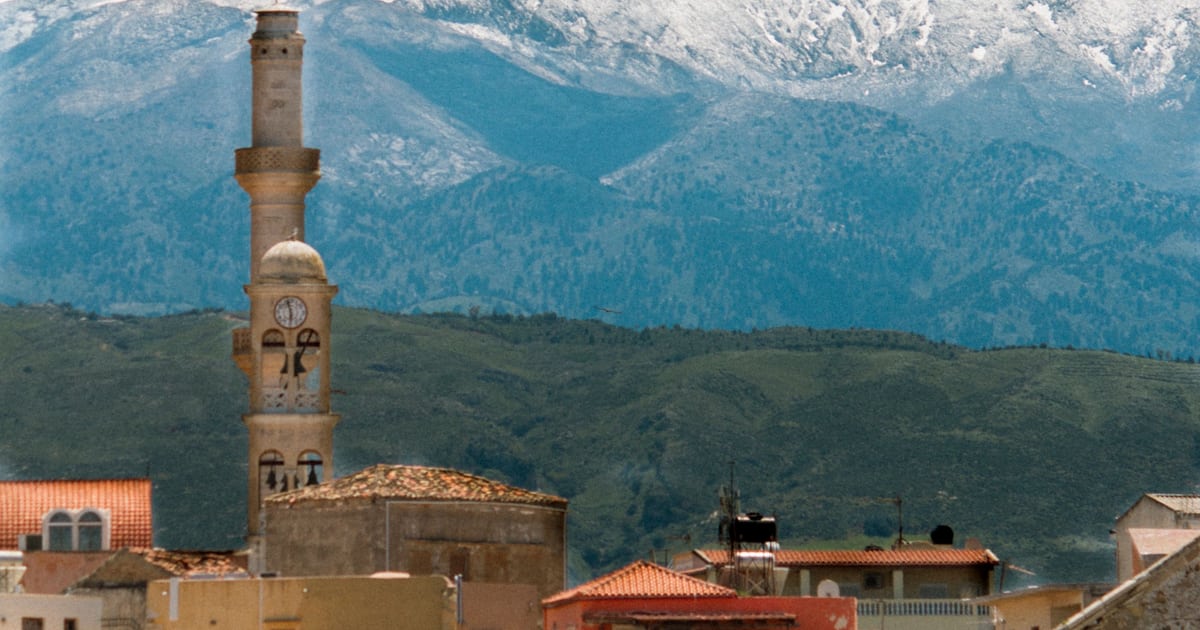
Lefka Ori, the White Mountains, rise south of Chania to Pachnes, 2,453 metres high. On the White Mountains class, the cooking takes place on a family-run farm at the foot of the range. The harbour breakwater, walked before a Chania cooking class begins, frames the old town against those peaks.
The Greek name fits the peaks. Pale limestone gives them their colour, and snow covers them until late spring. The stone shades from light grey, through bluish tones, to black. Another name, Madares, describes high ground bare of plants. They stand in the middle of western Crete, inside the Chania regional unit.
More than thirty summits stand above 2,000 metres, and Pachnes tops them all. Plateaus lie between the peaks at heights of 500 to 1,100 metres, among them Omalos and Askifou. About fifty gorges cut through the range, and Samaria is the one with a national park.
See also Mykonos Shore Excursion.
Omalos is a village at 1,041 metres, on a plateau of fifteen square kilometres. It lies 38 kilometres south of Chania, about five kilometres from the gorge entrance at Xyloskalo. The plateau was once a lake, drained, it is thought, through the Tzani Cave. Cool air and fertile soil suit potatoes, apples and cereals.
Samaria Gorge National Park belongs to the same range, in the Chania regional unit. The gorge begins on the plateau near Omalos and ends at Agia Roumeli, on the Libyan Sea. It became a national park in nineteen sixty-two, partly to protect the kri-kri, the Cretan wild goat.
Villages sit on the northern foothills, well below the summits. Meskla stands at 200 metres in the valley of the Keritis river, 21 kilometres from Chania. Theriso lies south of the city, at the top of the gorge that carries its name. The drive up that gorge covers 14 kilometres, and the gorge brings cooler air.
On the private mountain format, a drive south from the city comes before a Chania cooking class reaches its farmhouse. Mountains and sea form the backdrop to that meal. On the small-group format, set in the Cretan countryside, the shared meal comes with panoramic views of the peaks.
Another page on a similar theme: Mykonos Wine Tasting.
The old town stands next to the harbour. Before a Chania cooking class starts, a walk through it passes Kasteli, the central quarter. The quarter sits on a small hill by the seafront. Splantzia lies beside its east part and is largely untouched. Venetian walls once surrounded the old town, and only the eastern and western parts survive.
The lighthouse marks the harbour entrance and stands 26 metres above the bay. Firkas Fort, built by the Venetians, guards the same entrance. Both landmarks come into view on a quay walk before a Chania cooking class sets off. Venice built dockyards in Chania mainly for repairs.
Seven of those dockyards stand on the east side of the port. The Grand Arsenal, a former Venetian dockyard, now houses the Centre for Mediterranean Architecture. Souda Bay lies east of the city, between the Akrotiri peninsula and Cape Drapano. The bay stretches about 15 kilometres from west to east and measures two to four kilometres across.
When can a Chania cooking class run and which rules apply?
Chania has sunny, dry summers and mild, rainy winters. Clear skies are almost an everyday feature from April to October. Read the age, dress and cancellation rules for a Chania cooking class booking before choosing a date.
The climate atlas of the Hellenic National Meteorological Service gives the mean daily high and the rainfall for Chania airport. Heat above 38 degrees is not common, because the etesian winds from the Aegean Sea moderate the air. Heat waves can still start as early as March, and they can arrive with Saharan dust.
A related page on this site is Santorini Catamaran Cruise.
- January: 14.0 degrees Celsius, 126.4 millimetres of rain
- April: 19.9 degrees Celsius, 26.9 millimetres of rain
- June: 29.0 degrees Celsius, 2.0 millimetres of rain
- July: 30.5 degrees Celsius, 1.4 millimetres of rain
- September: 27.5 degrees Celsius, 15.2 millimetres of rain
- October: 23.4 degrees Celsius, 61.5 millimetres of rain
The summer season in Chania is long, from April to mid-October. Winter is mild and rainy. November brings a mean daily high of 19.0 degrees Celsius and 86.7 millimetres of rain. Snow and frost are rare near the coast. The Lefka Ori range to the south makes the climate vary with elevation.
Weather can alter the programme for a Chania cooking class day. The operator of the White Mountains class reserves the right to make minor changes in unfavourable weather. Such changes can come without prior notice. If the operator cancels for low numbers or bad weather, every payment is refunded.
The dress code for a Chania cooking class listing in the White Mountains reads casual, comfortable clothing. An apron and cooking utensils are supplied on that class. On the village farm class near Chania, comfortable shoes and sun protection are recommended. Guests are outdoors there, gathering ingredients and cooking.
The White Mountains class asks guests to tell the company about allergies, tolerances or food preferences in advance. Children must always be accompanied by an adult on that class. The wine rule for a Chania cooking class meal is simple. Wine tasting is not allowed for children under 18 on that class.
For a similar plan, see Kos Pirate Cruise.
On the village farm class, bringing outside alcohol is not permitted. Extra food and drink are outside the White Mountains class, and gratuities are optional. Access differs between listings. One White Mountains listing marks the class as not wheelchair accessible. The village farm class near Chania is marked wheelchair accessible.
Book ahead for a Chania cooking class date, because early booking is advised for high season, public holidays and weekends. On one White Mountains listing, reservations must be made 12 hours before the tour. Each traveller’s full name and date of birth are needed. The booking cards on this page show live availability.
Free cancellation ends a set number of hours before the start, and the hours differ between listings. No refund follows a cancellation after that cut-off or a no-show. Arriving late for pickup counts as a no-show on one White Mountains listing. Another listing wants guests ready for pickup at least 10 minutes early.