
A Chania olive oil tour takes you from the town into the olive groves of western Crete. You see a mill and taste the oil. Below you find the formats, the growing and pressing, the tasting and the booking day. The homepage lists more Greece Tours like this one.
Each tour card below opens a live GetYourGuide booking. Dates, pickup points and group sizes are shown there.
What is a Chania olive oil tour?
A Chania olive oil tour is an outing from Chania to an olive mill or grove, with an oil tasting. The formats range from a one-hour treasure hunt to a private trip of more than seven hours.
The seven-hour version of a Chania olive oil tour is a food trip as much as an oil trip. One itinerary visits a bakery, a cheese factory, a grove, a honey experience, an olive factory and a winery. That tour takes 1 to 50 guests and suits couples, families, solo travellers and groups.
If you plan to cross into Turkey as well, the homepage also lists Turkey tours.
One small-group Chania olive oil tour takes up to 20 people and lasts about six hours. It visits an olive oil estate and a winery, then finishes at a second winery with a light lunch. A village food trip has the same cap and length. It opens at a family-run olive mill and closes with a Cretan lunch.
A cooking class turns a Chania olive oil tour into a hands-on day. One half-day version lasts about 5 hours and takes 2 to 12 people, shared or private. You pick ingredients in a farmer’s garden, cook them in the class, and sit down to a three-course meal. The same day includes a wine and olive oil tasting.
The private mill and factory version of a Chania olive oil tour runs 7.5 hours with your own group only. It visits a private grove, a medieval oil factory and a modern one, and ends at a production facility. It suits food lovers, history fans and people who want a flexible day.
A factory and brewery variant lasts 6 hours. It pairs a guided oil tasting at an olive oil factory with a craft brewery visit. At the brewery you meet the brewers, taste beer and sit down to a traditional Cretan meal. The factory visit shows how fresh olives become extra virgin oil.
A village half-day lasts 4 hours 30 minutes. It visits a monastery with a historic museum and a cave with views over the olive groves. The last stop is an olive mill and winery, where wine and olive oil are tasted. This format puts the history first and the tasting last.
A Chania olive oil tour from the cruise port at Souda lasts about 3 hours, transport included. A guided visit of about 65 minutes at a family-owned mill and grove shows the millstones and traditional presses. This format suits cruise travellers, food lovers and people interested in traditional crafts.
Families get a format of their own in the treasure hunt. It lasts one hour in Kalyves, near Chania. A guide first explains oil production with millstones inside the mill. Children then collect equipment and solve riddles in the grove, with Greek myths in the story. The hour ends with a Mediterranean snack.
On a Chania olive oil tour, hosts explain the work at each stop. On the seven-hour tasting day, the guide explains every step at the cheese factory. At the olive oil estate on the small-group tour, guests learn how olives move from grove to press. In the private grove, a farmer-guide explains the picking, the processing and the farming.
Each format has its own set route, so the main choice is the format. Pick one hour for the treasure hunt, 3 hours for the port trip or 6 hours for a small group. Pick the seven-hour tasting day to combine wine, cheese, honey and bread. Pick the private day when you want a flexible pace.
How does a Chania olive oil tour show olive growing and pressing?
A Chania olive oil tour shows how olives become oil. The route runs from the grove to a mill, where the fruit is washed, crushed, stirred and spun. Crete holds more than 30 million olive trees.
Koroneiki is the variety to know before a Chania olive oil tour. The fruit is small, but it gives a high-quality oil yield. Koroneiki covers 50 to 60 percent of the olive acreage in Greece and is grown mainly for oil.
The olive tree of Vouves stands in the village of Ano Vouves, in the Kolymvari municipal unit of Chania. Ring analysis shows an age of at least 2,000 years, and University of Crete scientists have estimated 4,000. Its heartwood is lost, so radioisotope dating is impossible. The exact age stays unknown.
The Vouves tree still bears olives. It was grafted with the Tsounati variety, and its trunk measures 12.5 metres around. The tree is a protected natural monument. Its branches were used to weave winners’ wreaths for the Athens and Beijing Olympics. A museum in a nearby nineteenth-century house shows the traditional tools and process of olive cultivation.
One Chania olive oil tour pairs an ancient olive tree with an olive museum. A guided talk there covers the history of olive growing and oil production on Crete. The museum also covers traditional and modern methods. A mill follows, where the visit shows how harvesting methods and pressing shape the final oil.
The harvest runs through autumn and winter, and November and December are the busiest weeks. Nets are spread under the trees. Slender sticks, or a portable harvester with a spinning head, knock the olives onto the nets. Sacks reach the mill at the end of each day, because waiting lets oxidation lower the quality of the oil.
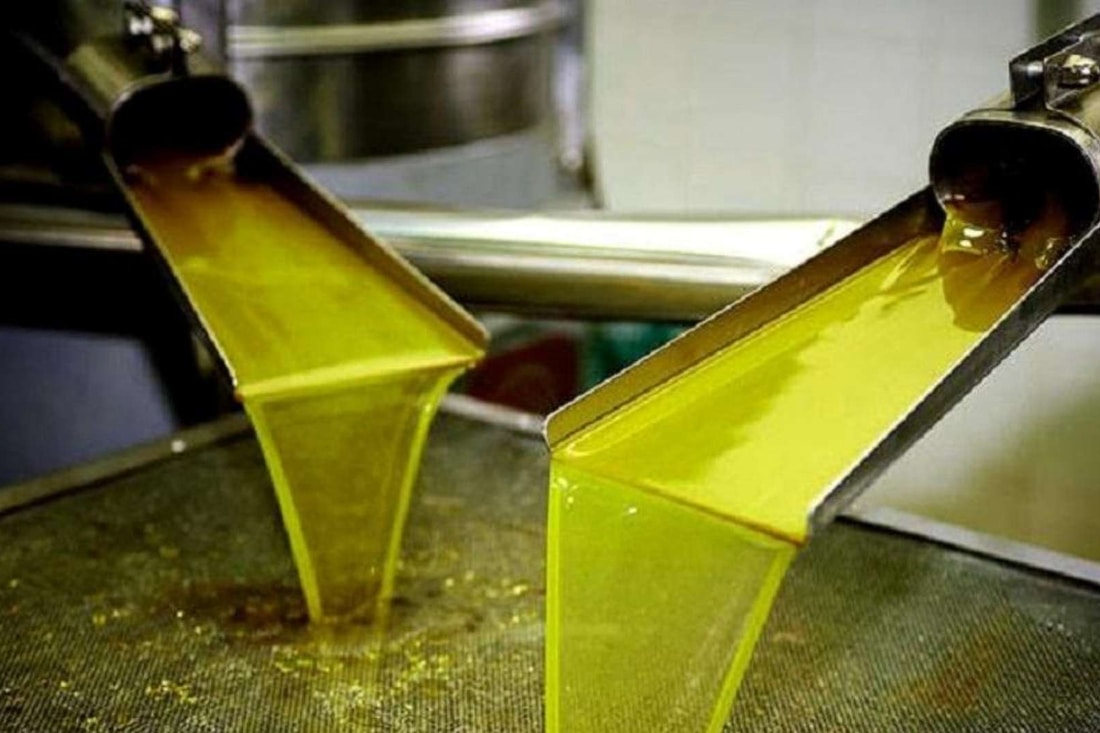
A Chania olive oil tour that enters a mill follows a fixed order. A belt carries the fruit while leaves are removed, and then the olives are washed. They are crushed into a paste. Slow churning, called malaxation, joins tiny oil droplets into larger ones. A centrifuge then splits the heavier water from the oil.
The oil is stored in metal tanks or glass bottles, not plastic. Cold extracted means the oil stayed below a set heat limit; the maximum for cold-pressed oil is 27 degrees Celsius. In Europe, centrifuged oil is labelled cold extracted, and only pressed oil can be labelled cold pressed. Heat degrades polyphenols, so cooler extraction keeps more of them.
A different Chania olive oil tour opens at a family-run mill. Guests there see how extra virgin oil moves from harvest to bottle. The International Olive Council states that virgin oil is made solely by mechanical or physical means. Thermal conditions must not alter the oil, and only washing, decantation, centrifugation and filtration are allowed.
Extra virgin oil must also be fit to eat as it is. Its free acidity, expressed as oleic acid, is not more than 0.8 grams per 100 grams. Acidity is not sourness: it is the share of free oleic acid, and it rises as oil degrades. Olives left to ripen fully give lower-quality oil and higher acidity.
Chania has its own protected olive oil names. Kolymvari Chanion Kritis and Apokoronas Chanion Kritis are PDOs, while Chania Kritis is a PGI. A PDO needs every stage of production in the named region. A PGI needs at least one stage there. The Chania Kritis PGI covers the whole prefecture and names Koroneiki and Tsounati as its olives.
What do you taste on a Chania olive oil tour?
A Chania olive oil tour puts the oil in your glass first. Pairings such as bread, rusks, cheese, honey and wine follow. You smell the oil, take a small sip and notice fruit, bitterness and a peppery bite in the throat.
Oil tasters follow a fixed routine. The International Olive Council method keeps the oil at about 28 degrees Celsius in a covered glass. Cooler oil releases its aroma poorly. Tasters tilt the glass, turn it to coat the sides, lift the cover and breathe in slowly. The sniff is capped at 30 seconds.
Next comes the sip. Panel tasters take about 3 millilitres and spread it over the tongue, palate and throat. Short breaths drawn in through the mouth carry the aroma to the back of the nose. Between oils, tasters chew a slice of apple and rinse with water.
Three words describe a good oil. Fruity is the smell of fresh olives, and it changes with the olive variety. Bitter is a taste found in oil from green olives or olives turning colour. Pungent is a biting feeling that spreads through the mouth and is strongest in the throat.
One Chania olive oil tour format is a guided tasting at a family mill and winery near Chania. A sommelier leads the oil session, and the oils arrive in special tasting bowls. Fresh bread comes with salt, oregano and lemon. The sommelier also covers the oil categories, olive varieties and tasting notes.
A small-group village food tour in Apokoronas starts at a family mill. The oil tasting there highlights a peppery finish and a fresh aroma. This Chania olive oil tour later stops at a cheese producer. Graviera, mizithra and anthotiros are tasted with local honey and rusk.
One Chania olive oil tour stops at a family bakery for traditional Cretan rusks, fresh bread and savoury pastries. Visitors can buy bakery products to take home. The closing platter on that tour holds olive oil, tomatoes, olives, cheese and honey.
A private Chania olive oil tour pairs five wines at a monastery with rusk, olive oil, sea salt and oregano. The private wine, honey and olive oil tour from Chania adds thyme honey at a village cooperative. Another day tour tastes fresh oil and local honey at one olive oil and honey factory.
Where a Chania olive oil tour adds a winery, the tasting centres on local grape varieties. Romeiko is a red grape born in Chania, and winemakers there turn it into rosé, sparkling and sweet wines. Vidiano is a local white. Kotsifali is a local red grape. One Chania Kotsifali wine has a robust body and red fruit aromas.
A good oil smells of fresh olives. An oil with no fruit smell, or with a flaw, falls short. The Council names flaws such as rancid, from heavy oxidation, and musty, from olives stored in damp. A peppery or bitter taste points to more polyphenols. Oleocanthal appears to cause the burn at the back of the throat.
A bottle bought after a Chania olive oil tour keeps well in dark glass or a can. The Council also backs the label line keep away from light and heat. It advises a shelf-life date no later than 24 months after bottling. Extra virgin oil is used raw, as a condiment and in salad dressings.
When and how do you book a Chania olive oil tour?
Book a Chania olive oil tour ahead and check live dates on the booking page. Pickup depends on the tour: a hotel in Chania, a meeting point you choose, or the Souda cruise port. The cruise-port trip and the seven-hour tasting allow free cancellation until one day before.
Start points differ from tour to tour. The seven-hour tasting lists hotel pickup and drop-off, and you give your meeting point at checkout. The private tour of seven and a half hours begins with a hotel pickup in Chania. The three-hour cruise trip collects guests at Souda port or at the Souda welcome sign.
The three-hour Chania olive oil tour from the cruise port counts visits, tastings and transport inside that time. About 65 minutes go to the mill, and the ride back takes 30 minutes. Transport is air-conditioned, and drop-off is at Souda port or in Chania.
Drive times and pickup stops depend on the tour. The tasting of seven to eight hours names Platanias, Agia Marina and Kalyves as pickup stops. A one-hour mill visit on the Kolymvari side lies roughly 25 minutes from Chania by taxi. Hotel pickup is not part of it.
The season changes what a Chania olive oil tour shows. One mill near Kolymvari works mainly from October to February. A mill tour in Vryses shows no live pressing in summer, and experts explain the process instead. A picking day with a fresh-oil tasting runs from the second half of October to December.
Wear comfortable walking shoes on a Chania olive oil tour. The private tour of seven and a half hours has a fair amount of walking and standing. Bring sun protection and a hat in summer. The tasting of seven to eight hours also asks for water, sunscreen and a camera.
Children join the seven-hour tasting when they are over two years old, and they get a platter and drinks. On the six-hour wine and olive oil day, children travel with an adult, and under-18s get non-alcoholic drinks. The private tour suits children who are comfortable with walking and standing.
Tell the company about allergies, food tolerances or food preferences in advance. One private day trip asks for exactly that. Languages differ by tour. The cruise-port trip runs in English. The private tour speaks English and Greek. The seven-hour tasting runs in English only.
Group size depends on the format. A 90-minute tasting at one mill is family-friendly and capped at eight travellers. The seven-hour tasting takes one to 50 guests. A private Chania olive oil tour keeps the group to your own party.
Booking runs through a page that checks availability for your dates. The seven-hour tasting needs a booking at least one day ahead. A card confirms it, and nothing is taken at that moment. The cruise-port trip, the six-hour wine day and the 90-minute tasting also end free cancellation one day before the start.
A Chania olive oil tour fits around a beach or old-town day when it is short. The seven-hour tasting starts at eight o’clock or ten o’clock, so it takes up the day. Cruise excursions can pair an olive farm and a winery with the Venetian harbour.
- Check live dates and book a day ahead.
- Choose the start: hotel, meeting point or Souda port.
- Wear walking shoes and bring a hat and sunscreen.
- Tell the company about allergies and diets.
- Carry a passport or ID where wine is tasted.