A Bosphorus sightseeing cruise is a boat trip along the strait that splits Istanbul between two continents. This post covers the strait, the palaces, the fortresses and bridges, the Asian shore, the formats and the booking rules. The homepage lists more Greece Tours for the Greek islands.
Every tour card below opens a live GetYourGuide booking. Audio languages and sailing times are shown on each card.
What is a Bosphorus sightseeing cruise and how does the trip run?
Passengers board a boat at a pier on the European shore and sail the strait between Europe and Asia. A phone audio guide names the sights on the way. The two-hour format on a Bosphorus sightseeing cruise runs up the European shore and back down the Asian one.
Passengers on a Bosphorus sightseeing cruise sit aboard a boat while the city of Istanbul passes along both banks. The small-group day, sunset and night format includes tea, coffee, soft drinks and Wi-Fi. The two-hour smartphone-guide format serves unlimited Turkish tea and coffee, and it also has Wi-Fi on board.
After the water, the homepage lists Turkey tours on land, from Cappadocia to the Aegean coast.
The boarding pier depends on the format. The old-city format starts at a pier in the Fatih district, on the European side. The Golden Horn format begins with a host, who meets passengers on the far side of Hagia Sophia. The host then walks them down to the pier before boarding.
On the two-hour smartphone-guide format, the boat spends one hour along the European side, up to the second road bridge. It then spends one hour returning along the Asian shore. The short format on a Bosphorus sightseeing cruise turns at the first road bridge and sails back.
Length varies by format. The old-city format lasts one hour and ten minutes, and its route returns through the Asian side. The sunset format from a European-side pier lasts about ninety minutes and ends at the pier where it began. Another format runs about seventy-five minutes, with an audio guide that has thirteen stops.
Commentary on a Bosphorus sightseeing cruise arrives through an audio guide on the passenger’s own phone. Headphones and a charged battery matter. The two-hour smartphone-guide format needs no app download. Live announcements on board give general information only, and they are not a full narration of the trip.
Language choice differs by format. The small-group format with a night version offers nine languages: Arabic, German, Greek, English, Spanish, French, Italian, Russian and Turkish. The old-city format offers ten languages in its app. The two-hour smartphone-guide format offers eleven. The ninety-minute sunset format carries an English audio guide.
Group size depends on the format as well. The yacht format is designed for up to sixteen people and sails on a twenty-metre yacht. On the day and sunset audio-guide format, the small-group option is limited to twenty-five guests. The yacht format runs two hours, in a day or a sunset version.
Seating on a Bosphorus sightseeing cruise varies by format. The ninety-minute sunset format lets passengers choose between outdoor and indoor seats. The yacht format has an open deck and an enclosed deck. The daytime-or-sunset audio-guide format does not guarantee open-deck seating. Indoor seats are assigned there when weather or operations require it.
Another page that includes Bosphorus is Bosphorus Dinner Cruise.
The short one-hour format suits visitors short of time, with the same onboard services but fewer sights. The ninety-minute sunset format is family-friendly and suitable for all ages. The two-hour smartphone-guide format suits all physical fitness levels. The old-city format also includes a Bosphorus tour map.
Food and drink differ by format. The yacht format serves tea, water and coffee with a homemade mini pizza, fresh seasonal fruit and mixed nuts. The small-group format that includes night sailings lists sweet and savoury cookies, chips, nuts, baklava and fruit. The ninety-minute sunset format leaves out food, though snacks and drinks are sold on board.
Visitors on a Bosphorus sightseeing cruise hear commentary as the boat passes landmarks. The Golden Horn format sails the Golden Horn first and the Bosphorus after it. Its audio guide comes in Arabic, Russian, English and Spanish. The ninety-minute open-deck format offers a smartphone guide in over ten languages, to be downloaded before the pier.
One small-group format on a Bosphorus sightseeing cruise comes in day, sunset and night versions. The day, sunset or night timing is chosen at booking. Departure and arrival times shift with the hour of sunset. That format lists comfortable seating on a yacht with a spacious deck.
Why does the strait itself belong to a Bosphorus sightseeing cruise?
Boats sail on a strait about thirty kilometres long, running from the Black Sea down into the Sea of Marmara. Two currents run through that water at once during a Bosphorus sightseeing cruise. Surface water flows south, while deeper and saltier water flows north.
The Bosphorus is a channel between two seas. Its northern end opens on the Black Sea, and its southern end opens on Marmara. Marmara then reaches the Aegean through the Dardanelles. The water between the two ends runs about thirty kilometres, the lane a boat follows during a Bosphorus sightseeing cruise.
Geographers count the strait among the borders between Asia and Europe. The Dardanelles, Marmara and the Bosphorus together make up the Turkish Straits, one part of that border. A boat sails between the two continents during a Bosphorus sightseeing cruise. Istanbul lies on both banks, with about two-thirds of its people on the European side.
The banks stand at different distances along the strait. The narrowest stretch lies between Kandilli Point and Asiyan, where they are less than one kilometre apart. In the north, between Umuryeri and Buyukdere Limani, the gap grows to more than three kilometres. Midstream depth averages sixty-five metres, and the deepest point lies between Kandilli and Bebek.
For a similar plan, see Istanbul Classical Tour From Izmir.
Two layers of water pass each other in the channel. Fresher water from the Black Sea flows south at the surface, carrying about sixteen thousand cubic metres a second. Near the seabed a saltier layer runs north, carrying about eleven thousand. Both layers move under the hull during a Bosphorus sightseeing cruise.
Computer models find that the exchange is controlled at two places. One is a narrowing with a sill at the southern end, and the other is a sill in the north. Day-to-day and seasonal changes in the flow follow the runoff of rivers that feed the Black Sea.
Researchers disagree about when and how the strait began. Rock mapped under the seabed shows an old river valley in the north that ran toward the Black Sea. A deep basin lay in the south, opening toward Marmara, with a barrier between the two. The strait took its present form when the basin joined the valley.
Boats float above a narrow valley during a Bosphorus sightseeing cruise. Seabed surveys describe it as a valley that grew from a stream and was shaped by movements of the crust. A later review judges that Black Sea water drained out to the Mediterranean bit by bit.
Wind finds a channel in the strait, and heavy gusts form along its shores. Fog is known to cut the sunshine that reaches Istanbul, though foggy days have declined steadily since the nineteen-seventies. Two seas shape the climate of the city: Marmara to the south and the Black Sea to the north.
The strait is also a working sea lane. Ferries, fishing boats, freighters and tankers share it with pleasure craft, and ferry crossings run between the two banks. Passenger boats share the lane with that traffic during a Bosphorus sightseeing cruise. Ships alter course by forty-five degrees between Kandilli Point and Asiyan, and by eighty degrees at Yenikoy.
Which palaces and mosques rise beside a Bosphorus sightseeing cruise?
Dolmabahce Palace, Ciragan Palace and the Ortakoy Mosque stand in that order on the European shore. Each one slides past after a Bosphorus sightseeing cruise pulls away from the old city. Sultan Abdulmecid I ordered Dolmabahce and commissioned the Ortakoy Mosque.
Besiktas is the district that holds all three buildings, on the European shore of the strait. Its shore is sheltered from the northeasterly winds, so ships find a good mooring place there. Besiktas is also a sea hub of the Bosphorus. Ferries leave its pier for Kadikoy, Eminonu and Uskudar.
After a Bosphorus sightseeing cruise leaves Eminonu, Dolmabahce Palace is the first highlight. Ciragan Palace is the second, on the format that begins at that pier. Garabet Balyan and his son Nikogos Balyan were among the architects of Dolmabahce. The design mixes Baroque, Rococo and Neoclassical styles, and the palace holds two hundred and eighty-five rooms.
Related page: 5 Day Istanbul Tour Package.
The palace stands on ground that began as a bay of the strait. Over time the bay was filled in and became an imperial garden. That history gives Dolmabahce its name, which means filled garden. The main building runs parallel to the Bosphorus, and it replaced an older waterfront palace of Besiktas.
After a Bosphorus sightseeing cruise reaches Dolmabahce, two more landmarks stand near the palace: a clock tower and a mosque. Sultan Abdulhamid II ordered the four-storey tower, which is twenty-seven metres high. Bezmialem Valide Sultan, the mother of Abdulmecid I, commissioned the baroque mosque beside it. Garabet Balyan designed that mosque.
Ciragan Palace occupies the European shore between Besiktas and Ortakoy. Sultan Abdulaziz had it raised in the nineteenth century, replacing an older palace. Its inner walls and roof were wood, its outer walls coloured marble. On the hill behind it, a marble bridge leads to Yildiz Palace. Only the outer walls survived the great fire of nineteen ten.
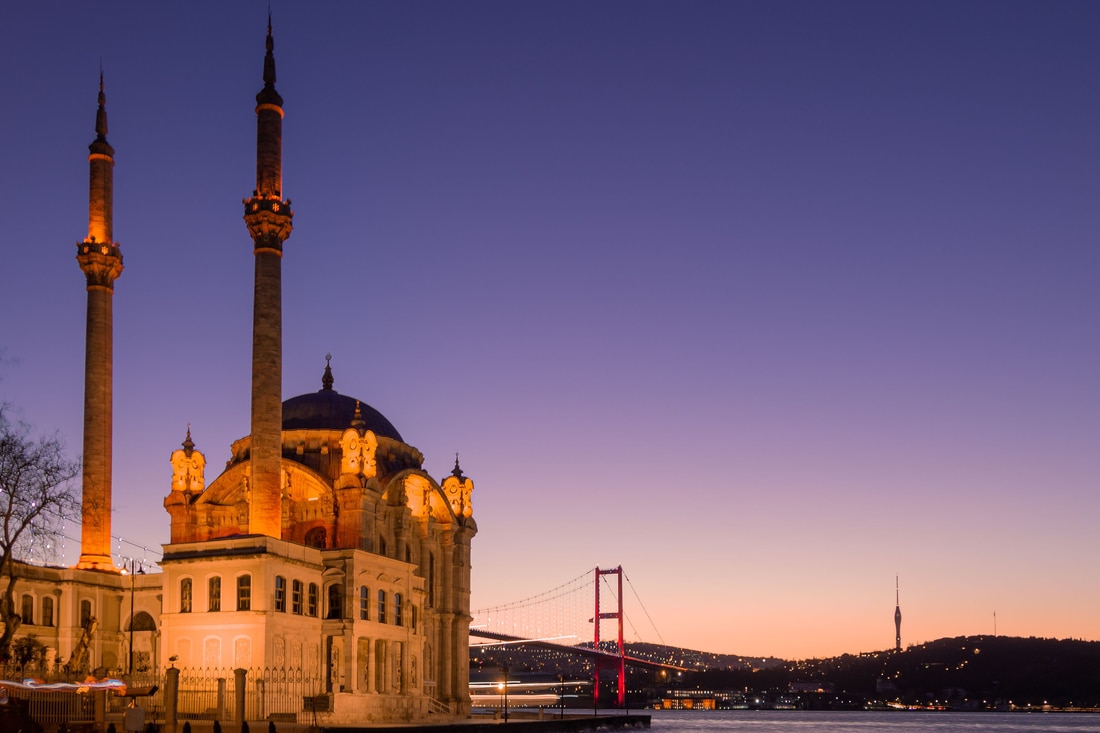
After a Bosphorus sightseeing cruise passes Ciragan, the next landmark is the Ortakoy Mosque, formally the Buyuk Mecidiye Camii. Sultan Abdulmecid I commissioned it, and the Armenian father and son Garabet and Nikogos Balyan were its architects. The mosque stands where the Ortakoy pier square meets the water. The European pylon of the Bosphorus Bridge stands very close to it.
The mosque has a single dome, first built of brick. The brick dome cracked over time, and the rebuilt dome is concrete. Two slim stone minarets rise beside it, and their balconies resemble Corinthian capitals. Two rows of windows light the hall. Marble and porphyry form the mihrab and minbar, and the hall holds calligraphy panels by Abdulmecid I himself.
After a Bosphorus sightseeing cruise ends, the Istanbul Naval Museum in Besiktas shows the rowing boats of the sultans. It stands near the Besiktas ferry pier and was established in eighteen ninety-seven. Its collection holds more than twenty thousand items, among them imperial caiques and ship models.
The museum is the largest maritime museum in Turkey. Its building has two floors above ground and one basement floor. The basement holds figureheads, ship ornaments and ship models. The displays also include naval uniforms and historical documents. It lies in the Carsi quarter, whose name means marketplace, together with Barbaros Square.
Another page on a similar theme: 7 Day Turkey Tour by Flight From Istanbul.
The Bosphorus bounds the palace grounds on the east, and a steep precipice bounds them on the west. Inside, the Crystal Staircase winds in a double horseshoe curve, and its makers used Baccarat crystal, brass and mahogany. The Dolmabahce Mosque on the Kabatas shore has a huge dome, with two minarets set symmetrically behind it.
Kabatas is a quarter in the European part of Istanbul, south of the Dolmabahce quarter. From Kabatas, tram line T1 passes through Eminonu on its way to Bagcilar. A funicular joins Kabatas to Taksim Square. The line is five hundred and ninety-four metres long, and the ride takes two and a half minutes. Ferries call at Kabatas Pier.
Which fortresses and bridges stand along a Bosphorus sightseeing cruise?
Two fortresses and three road bridges line the water along a Bosphorus sightseeing cruise. Rumeli Hisari, built in fourteen fifty-two, faces Anadolu Hisari across the narrowest stretch of the strait. Marmaray, a rail tunnel, crosses beneath the strait out of sight.
Rumeli Hisari crowns a hill on the European bank, its towers showing above the shore along a Bosphorus sightseeing cruise. Sultan Mehmed II ordered it. Work began in fourteen fifty-two and ended the same year. The aim was to control the ships passing through the strait. Anadolu Hisari faces it across the water.
Three hundred masters, seven to eight hundred workers, and two hundred coachmen, boatmen and transporters built the fortress. Three main towers carry the names of the viziers who supervised them. The north tower is a cylinder, and the waterfront tower is a twelve-sided prism. Thirteen small watchtowers stand on the walls between them.
Sultan Bayezid I had Anadolu Hisari built from thirteen ninety-three. It was erected as a watch fort at the narrowest stretch of the strait. Its walls stand on the Asian bank along a Bosphorus sightseeing cruise. Guzelce Hisar, the Beauteous Fortress, is its older name. Anadolu Hisari itself means the Anatolian Fortress.
The walls form an irregular pentagon. Inside them stands a four-sided main tower, twenty-five metres high. Five watchtowers mark the corners. The Goksu creek bounds the site on the south. Mehmed II, a grandson of Bayezid I, added a wall two metres thick and three more watchtowers. The whole complex covers about seven thousand square metres.
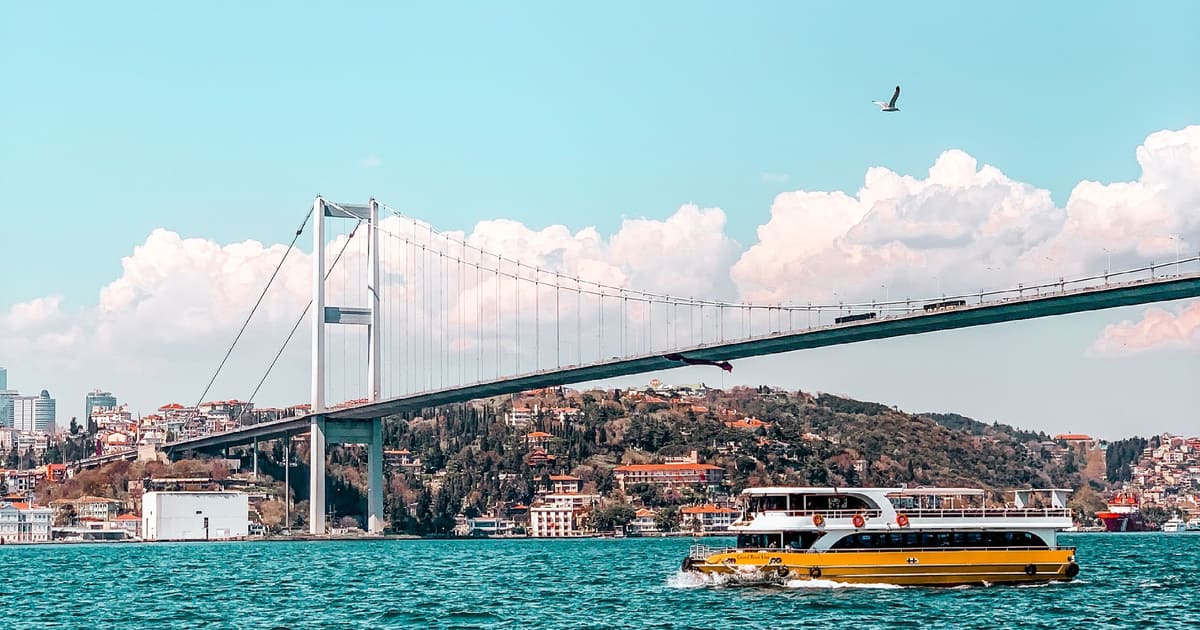
The first road bridge links Ortakoy on the European shore with Beylerbeyi on the Asian shore. Steel towers carry the deck high above the water along a Bosphorus sightseeing cruise. Builders completed the bridge in nineteen seventy-three. The main span measures one thousand and seventy-four metres, and the deck clears the sea by sixty-four metres.
The site also covers Istanbul Classical Tour From Ankara.
The second road bridge is the Fatih Sultan Mehmet Bridge. It joins Hisarustu on the European side to Kavacik on the Asian side and opened in nineteen eighty-eight. Steel pylons carry the deck across a main span of one thousand and ninety metres. The bridge carries the name of Sultan Mehmed II, who ordered Rumeli Hisari.
The third bridge stands near the northern end of the strait, last of the three along a Bosphorus sightseeing cruise. Garipce in Europe and Poyrazkoy in Asia are its two ends. It opened in twenty sixteen, a hybrid of suspension and cable-stayed design. Its main span reaches one thousand four hundred and eight metres between the towers.
The three bridges differ in design. Inclined hangers hold the deck of the first, and vertical hangers hold the deck of the second. The third carries a double-track railway beside eight motorway lanes. Its whole length is two thousand one hundred and sixty-four metres. Sultan Selim I, nicknamed Yavuz, gives it its name.
Marmaray runs under the strait along a Bosphorus sightseeing cruise. Trains use an immersed tube about one point four kilometres long. Engineers designed the tube to flex and bend, as tall buildings do in an earthquake. It opened in twenty thirteen and was the first standard-gauge rail link between Europe and Asia.
How do the Asian shore and its wooden mansions fit a Bosphorus sightseeing cruise?
Timber was the main building material of the yali, a mansion built right on the waterside. Yalis give the Asian bank its wooden look throughout a Bosphorus sightseeing cruise. Kanlica, Kuzguncuk, Beylerbeyi and Uskudar are the places of that shore.
Yali is a Greek loanword, taken from yiali, the Greek for seashore. A yali was set apart from the mansion called a konak and the pavilion called a kosk. Repeated restorations have reduced the wooden parts of old yalis, yet wood still identifies a historic one.
Six hundred and twenty waterside houses of this kind are counted along the strait. On the Asian bank, yalis can still be found right beside the water. Docks of their own once stored the boats called caiques. The houses were the luxurious homes of the wealthy, and certain ones held a private hamam, a Turkish bath.
Beylerbeyi has been a residential area since Byzantine times, and its palace stands out throughout a Bosphorus sightseeing cruise. Fire destroyed the timber palace that Sultan Mahmud the Second built on the site. Sultan Abdulaziz commissioned the present palace, which served as a summer residence and a state guest house.
12 Day Turkey Tour is a close match for this topic.
The Kucuksu Pavilion stands in Kucuksu, a neighbourhood of Beykoz district on the Asian bank. Sultan Abdulmejid the First commissioned it, and Garabet Amira Balyan and his son Nigogayos designed it in the neo-baroque style. Sultans used it for short stays during country excursions and hunting. Builders finished it in eighteen fifty-seven.
Wealthy people built elegant waterfront mansions at Kanlica in the Ottoman period. Historic wooden mansions remain on the shore throughout a Bosphorus sightseeing cruise. Iskender Pasha, a military judge, commissioned the mosque inland from the pier. The quarter is known for its yoghurt, sprinkled with caster sugar and sold in local cafes. Bulbul Creek empties into Kanlica Bay.
Kuzguncuk adds quiet streets of antique wooden houses to the Asian bank throughout a Bosphorus sightseeing cruise. Cobblestone streets, historic mansions and plane trees make Kuzguncuk a popular film location. Vegetable gardens count among its features. The name has an uncertain origin, and one account links it to a holy man called Kuzgun Baba.
Uskudar adds two mosques by Mimar Sinan to the waterfront throughout a Bosphorus sightseeing cruise. Mihrimah, a daughter of Suleiman the Magnificent, commissioned the larger one. People also call it the Iskele Mosque, after the nearby ferry terminal. A vizier of Suleiman built the smaller one, which holds a library in its courtyard.
Camlica Hill rises above Uskudar throughout a Bosphorus sightseeing cruise. Fountains, flower gardens and monumental trees fill its public park. Ottoman-style teahouses, cafes and a restaurant occupy the grounds. At two hundred and eighty-eight metres above sea level, the hill offers panoramic views over the southern Bosphorus.
Urban forests belong to Kandilli, a quarter of Uskudar on the Asian side. The observatory there belongs to Bogazici University and works mainly on earthquake research. It sits on a hill overlooking the strait, and an earthquake museum stands on its campus. The Kandilli Anatolian High School for Girls was one of the first girls’ high schools in Ottoman Turkey.
How do the day, sunset and night formats shape a Bosphorus sightseeing cruise?
Light, lamps and air temperature shape a Bosphorus sightseeing cruise. Daylight carries the day format and a low sun carries the sunset format. On the night format, the two suspension bridges are lit in colours from monochrome to a full rainbow.
Winters in Istanbul are quite cloudy, with sunshine on about twenty per cent of days. Summers bring sixty to seventy per cent of possible sunshine. At the Kirecburnu station in Sariyer, July records 319.3 hours of sun and December 62.0. Season and cloud shape a Bosphorus sightseeing cruise. Morning sailings meet calmer water and emptier decks.
Compare this with Turkey Blue Cruise.
Compass and calendar shape a Bosphorus sightseeing cruise. Sunsets fall due west at both equinoxes. In spring and summer the Sun sets in the north-west, and in autumn and winter in the south-west. The old city district of Fatih has the Bosphorus as its eastern border, so it lies west of the water.
Solar tables for the strait’s latitude give the hours. Sunset falls at about twenty to nine in the evening from late June to early July. In early December it falls at about twenty-five to six. These hours shape a Bosphorus sightseeing cruise. Sunsets stay between those two limits all year.
The tables give the spring and autumn hours too. Around both equinoxes sunset falls just after seven in the evening. At the start of April it falls at about half past seven. At the start of October it falls at about a quarter to seven. At the start of November it falls at six.
Shortly before sunset, daylight turns redder and softer than it is with the Sun higher. On the sunset format the scenery shifts from bright to golden hues. Civil twilight lasts until the Sun sits six degrees below the horizon. Sunset passengers board in daylight and come home to a lit skyline.
Night lighting starts with the bridges. A computerised LED system on the first road bridge changes colours and patterns. These lights shape a Bosphorus sightseeing cruise. Passengers on one night format pass beneath the lit suspension bridges around the middle of the trip. The lit bridge at night is a favourite photo opportunity.
One night format shows Dolmabahce Palace illuminated against the dark sky. On another, the lights of Beylerbeyi Palace cast a glow over the water. A third names illuminated palaces, mosques and bridges, with the city lights reflecting on the water. A fourth shows Ortakoy Mosque highlighted by the night.
Narration changes from format to format. The standard sightseeing loop is audio-guided past the palaces and under the first road bridge. The small-group listing sold as day, sunset and night cruises includes a mobile audio guide. One night format offers guided commentary in English instead, and another sails to romantic music with no commentary named.
At the Kirecburnu station in Sariyer, April has a mean daily maximum of 16.1 degrees Celsius. Its mean daily minimum is 8.1. October reads 19.9 and 13.6. Night temperatures shape a Bosphorus sightseeing cruise. Open decks run cooler than the streets after dark. One night format advises a light jacket for spring and autumn evenings on the water.
A neighbouring topic is West Turkey Tour Package.
Which sights of the old city can a passenger see from a Bosphorus sightseeing cruise?
Hagia Sophia, Topkapi Palace, Maiden’s Tower and Galata Tower appear on the Golden Horn format from a Bosphorus sightseeing cruise. Audio commentary names all four as the boat passes them. Genoese builders completed Galata Tower in thirteen forty-eight.
The Golden Horn is an inlet that opens off the strait near where the Bosphorus reaches the Sea of Marmara. Its length is 7.5 kilometres, and its widest point measures 750 metres. Its depth reaches about thirty-five metres at the mouth. Two streams, the Alibey and the Kagithane, run into it, which makes it an estuary.
Seen from a Bosphorus sightseeing cruise, Eminonu and Karakoy stand on opposite shores of the Golden Horn mouth. Eminonu lies on the historical peninsula and is home to the busiest ferry crossings for the Bosphorus. Karakoy has been a port area since Byzantine times. The Galata Bridge links the two quarters, and tram tracks run down its deck.
Galata Tower stands on a hill thirty-five metres above sea level and measures 62.59 metres to the roof tip. Until the middle of the twentieth century it ranked among the tallest buildings in Istanbul. Its top floor gives a wide view of the city. Its roof tip rises into view from a Bosphorus sightseeing cruise.
Sarayburnu, Hagia Sophia, the Blue Mosque and Galata Tower fall into one view across the Golden Horn. Justinian I built Hagia Sophia, and it was completed in AD five hundred and thirty-seven. It stayed the largest church for five hundred years. Its minarets are Ottoman additions and are no part of the Byzantine design.
Sultan Ahmed I ordered the Blue Mosque, and Sedefkar Mehmed Agha was its architect. Builders worked on it in the early seventeenth century. Six minarets flank it, and a cascade of domes and half-domes shapes its outline. It gave its name to the Sultanahmet neighbourhood. Passengers meet its domes and minarets from a Bosphorus sightseeing cruise.
Topkapi Palace stands on Sarayburnu, a headland of the old city. The Golden Horn lies on one side, the Sea of Marmara on the other. An Eastern Roman acropolis once stood on the same ground. Sultan Mehmed II ordered the palace in the fifteenth century. For nearly four centuries it was the sultans’ main home.
Suleymaniye Mosque crowns the Third Hill above the Golden Horn. Mimar Sinan, the imperial architect, designed it for Suleiman the Magnificent. Work began in fifteen fifty, and the mosque opened in fifteen fifty-seven. Four minarets stand at the corners of its courtyard, and its dome is fifty-three metres high.
A related page on this site is 9 Day Cheap Turkey Bus Tour From Istanbul.
Kiz Kulesi, the Maiden’s Tower, rises from a small islet about two hundred metres from the Uskudar coast. The islet lies at the southern entrance of the strait. The interior of the tower became a cafe and restaurant. The audio guide on the Golden Horn format names the tower, and passengers see it from a Bosphorus sightseeing cruise.
Legend ties the name to an oracle, an emperor’s daughter and an asp hidden among fruit. The tale is said to explain the name. Leander’s Tower is a second name, in use since Byzantine times. That name goes back to the Greek tale of Hero and Leander.
When can a Bosphorus sightseeing cruise run and which rules apply?
Bad weather can cancel a sailing, and the sunset-format listing then offers another date. Summers are warm to hot and winters cloudy. Pack layers, sun protection and sunglasses for a Bosphorus sightseeing cruise departure in any season.
Istanbul’s climate is classed as either hot-summer Mediterranean or humid subtropical. Summer days run warm to hot, with a daytime average near 28 degrees Celsius. High dew points rate midsummer as moderately uncomfortable. Steady northeasterly air that resembles the meltem rules the season. Choose light clothes for a Bosphorus sightseeing cruise departure in that heat.
Sunshine follows the seasons, with cloudy winters and sunnier summers, and a year brings about two thousand hours of it. In winter the dominant northeasterly turns damp and takes the name Poyraz. Spring and autumn are mild. The mildest weeks fall at the end of spring and the start of autumn. A warm outer layer suits winter.
The city ferry operator states that its voyages can be delayed or cancelled for weather reasons. Severe windstorms are rare in Istanbul and mainly come from the south-westerly Lodos of winter. Gusts reach 80 to 100 kilometres an hour in a normal year, though they seldom do more than sporadic damage.
On the sunset-format listing, a sailing can be cancelled in bad weather for safety. Passengers are told and offered another date. One seller states that its day-or-sunset tickets cannot be cancelled or rescheduled. Other sellers refund in full when a booking is cancelled a day ahead. Compare the terms before paying for a Bosphorus sightseeing cruise listing.
Wind takes the thin layer of warm air from the skin, so the air feels colder than the thermometer shows. A windproof top over a jumper handles that. From level three upward, the World Health Organization’s UV index asks for shade, a shirt, sunscreen and a hat. The day, sunset and night listing names sunglasses.
Next on this subject: Istanbul Small Group Tour From Izmir.
Tickets can be shown on the phone, and one seller accepts paper too. One seller asks for a valid photo ID beside the voucher. Two sellers tell passengers to confirm the starting point on the final voucher. Reach the pier fifteen minutes early to check in for a Bosphorus sightseeing cruise sailing.
Child and access rules differ by listing. A day-or-sunset listing offers infant seats and allows strollers. That listing serves alcohol only from age twenty-one. The day-or-sunset listings that mention access say the boat is not wheelchair accessible. Ask the seller before booking for a Bosphorus sightseeing cruise seat.
Two sellers say the boat depends on availability, and passengers cannot choose a specific one. Early booking is advised for sunset hours and for public holidays and weekends. The listing with a choice of route recommends reserving ahead because of demand. Picking a date on the booking cards shows open days for a Bosphorus sightseeing cruise slot.
Hotel pickup and drop-off are not included on that route-choice listing. Passengers reach the pier on their own. That listing also states a restroom on board and allows service animals. One seller confirms an online reservation instantly. On one sunset listing, arriving late for pickup or departure counts as a no-show.