
A Saklikent gorge tour from Fethiye is a day trip to a deep canyon and an old hill city. This post covers the day, the gorge, Tlos, the waterfall valley, the lunch stops and the booking rules. The homepage lists more Greece Tours for the Greek islands.
Every tour card below opens a live GetYourGuide booking. Pickup points and group sizes are shown on each card.
What is a Saklikent gorge tour from Fethiye and how does the day run?
Pickup at the hotel starts the day on a Saklikent gorge tour from Fethiye. Minibus travel links three stops: Tlos, Gizlikent and Saklikent Gorge. The small-group format holds a maximum of 14 guests, who share the vehicle with one guide.
The day begins with a pickup. On the small-group tour, a minibus picks up guests at their hotels. The availability screen shows which pickup points apply. A private format covers hotels across the Fethiye area. A group format that starts at the gorge lists pickup and drop-off from designated areas.
For the rest of the Turquoise Coast and beyond, the homepage lists Turkey tours.
Three stops make up the day on the small-group format. Tlos comes first, Gizlikent second and the gorge last on a Saklikent gorge tour from Fethiye. Lunch falls in the middle of the day, at a restaurant beside the Gizlikent waterfall. Saklikent Gorge is the final stop before the drive back.
On the small-group tour, the minibus needs half an hour to link Tlos with Gizlikent. The group has over an hour at the gorge. The ride back lasts one and a half to two hours. Hotel drop-off falls in the early evening on a Saklikent gorge tour from Fethiye. Schedules are approximate and subject to change.
On the small-group tour, lunch is part of the day. The table holds four mezes to share, chips, salad and a choice of casserole or vegetable gratin. One soft drink per person comes with the meal. The meal sits between the ruins and the gorge, so the gorge visit comes after eating.
Meals change from format to format. The gorge-first format includes lunch but leaves drinks out. A private format serves lunch with local drinks at a restaurant built over the river. Read the included list of each listing before booking, because meals and drinks are not the same everywhere.
One guide leads the small party in a single minibus on a Saklikent gorge tour from Fethiye. Guide language differs by format: that listing names German, while a private format offers English, German and Russian guides. The gorge-first format lists English only, so the language line of a listing is worth reading.
Order of stops varies by format. A private format begins at Tlos, moves on to the canyon and ends with lunch at a river restaurant. The gorge-first format reaches the gorge before anything else and visits Tlos second. The small-group day described here opens at Tlos and breaks for lunch at Gizlikent.
A related page on Fethiye: Marmaris Tour From Fethiye.
The small-group format covers site entry fees, lunch and transport. One soft drink and the guide complete the list on a Saklikent gorge tour from Fethiye. Gratuities and spending on extras are paid on the day. A private format charges a small extra fee on site for optional mud baths.
Length and timing also differ by format. The private format lists a full day, with eight to ten hours from hotel pickup to return. The gorge-first format lists up to eight hours. It asks guests to arrange the pickup time and place with the local operator.
The private format spells out its inclusions in full. A licensed guide is listed, and air-conditioned transport runs throughout the day. Tlos site entry and canyon access are part of the booking, as is lunch with local drinks. Personal shopping, souvenirs and snacks beyond lunch are left out, and tips are paid separately.
That same format also states how long each stop lasts. Guests have two to three hours at Tlos. The canyon wading then takes about 1.5 to 2 hours. Hotel pickups for the format are noted for around seven or eight in the morning. That start leaves the full day for a relaxed pace.
Hotel pickup and a shared minibus suit travellers who want three stops without driving themselves. The small group rides back to its hotels on a Saklikent gorge tour from Fethiye. Visitors who want a party of their own can choose the private format instead. Either choice starts at the hotel.
Why does the canyon itself belong to a Saklikent gorge tour from Fethiye?
Saklikent Gorge is the natural centrepiece of the day, 18 kilometres long, with walls that reach 300 metres in places. Visitors wade through icy water during a Saklikent gorge tour from Fethiye, crossing wooden platforms and bridges along the way.
The name Saklikent translates as hidden city. The canyon lies inside Saklikent National Park, in the Seydikemer district of Mugla province, in the Aegean region. That district was formed out of part of the Fethiye district. Entering the park during a Saklikent gorge tour from Fethiye, visitors cross a bridge with the river beneath their feet.
Fethiye to Cappadocia Tour covers Fethiye too.
The gorge runs for 18 kilometres, steep and narrow, and counts among the deepest canyons in Turkey. Its rock walls climb to 300 metres at the highest points. At its tightest the passage drops to about two metres across, and the sky is hard to see from inside. A shepherd found the canyon in the nineteen-eighties.
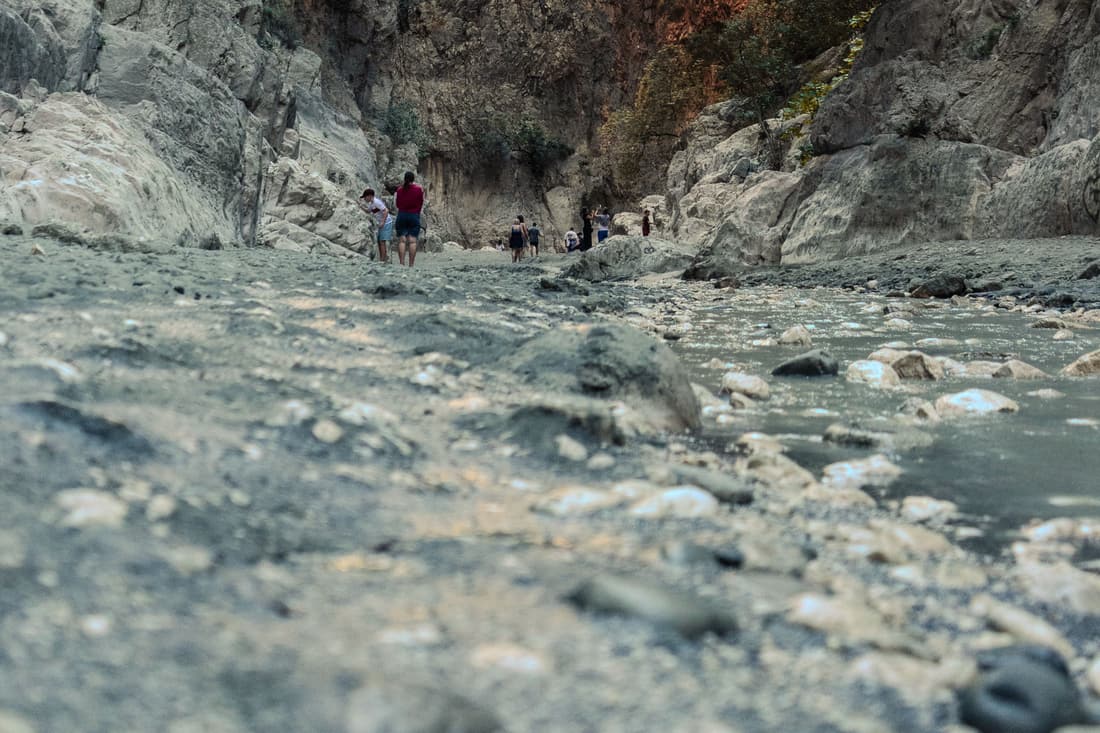
Flowing water wore the rock away over thousands of years. The ground here is limestone, which water erodes easily. Cracks along faults helped the stream cut a steep, deep channel. Walkers wade through that cut during a Saklikent gorge tour from Fethiye, passing between walls that the water carved.
The stream in the gorge is the Karacay, a tributary of the Esen River. In antiquity the Esen carried the name Xanthos. Meltwater from the Taurus Mountains runs through the canyon on its way down to that river. The water at the bottom stays cold even in summer, because sunlight hardly reaches it.
The canyon works in stages. Its wide mouth has a strong flow and waves. Deeper inside, daylight filters down between the walls, and wooden platforms make long walks possible. Parts of the path run on suspended platforms, with seating areas built above the water. Visitors walk through the water on the other stretches.
When the water level rises, visitors cross on wooden bridges fixed to the canyon wall instead of wading. Platforms and bridges shape the walk during a Saklikent gorge tour from Fethiye. Walkers go through the water itself between them, with the vast rock walls rising on both sides.
Fethiye also features in Pamukkale Ephesus Tour From Fethiye.
About 4 kilometres of the canyon are walkable after April, as the snow of the Taurus Mountains melts. Walking the full length counts as canyoning, and multi-day trips there camp overnight and rappel down waterfalls inside the gorge. So the season shapes what visitors see during a Saklikent gorge tour from Fethiye.
Summer turns the canyon cool and shady, and lower water levels open the deeper parts only in those months. The gorge is known then for its walk through ice-cold water. The canyon lies in the region where the Mugla and Antalya provinces meet. The area is popular with nature photographers.
The gorge belongs to the Taurus Mountains, a southern Turkish range between the Mediterranean shore and the inland plateau. The main rock beneath that range is limestone. Erosion has worn it into karst landscapes, with waterfalls, underground rivers and large caves. Visitors walk beside limestone walls of this kind during a Saklikent gorge tour from Fethiye.
Pupils can study canyon formation here, since the Ministry of National Education lists the park as a learning place. In summer the area is a popular spot for picnics and outdoor sports. Endemic flower species grow in the park, and the lower canyon carries maquis scrub and Turkish pine forest.
The area became a national park on the sixth of June, nineteen ninety-six, by decision of the Council of Ministers. The park covers about 1,643 hectares. It largely keeps its natural structure for visitors during a Saklikent gorge tour from Fethiye. Foxes, squirrels and wild boar live there, and birds can be watched too.
For more on Fethiye, see 8 Day Fethiye Marmaris Blue Voyage.
Why does the old hill city of Tlos sit within a Saklikent gorge tour from Fethiye?
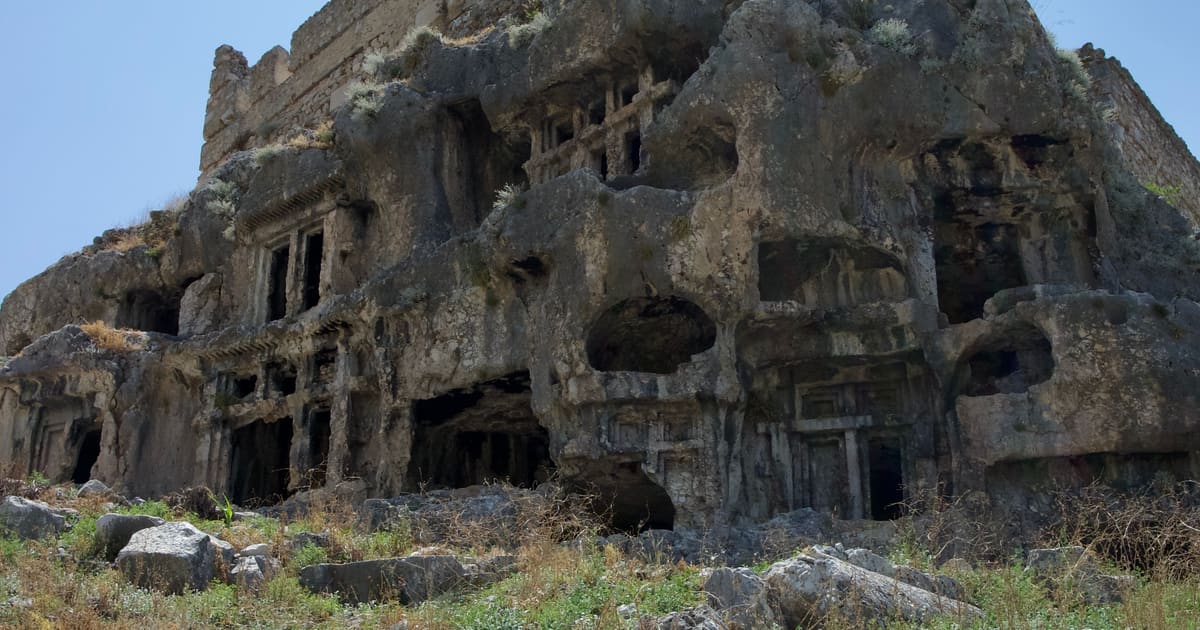
Tlos is a Lycian hill city above the Xanthos valley, occupied already in the Bronze Age. Its rock tombs, theatre and stadium give the history stop within a Saklikent gorge tour from Fethiye. Voting in the Lycian League placed it among six leading cities with three votes each.
A rocky outcrop carries the old city on the eastern side of the Xanthos valley. Cliffs drop almost straight down on its west, north and north-east faces. The west face is so steep that it commands the valley below. A monument at Patara records that the Lycian road network joined Tlos from seven directions.
Lycians called the city Tlawa, and Hittite texts name it Dalawa. The Greek form Tlos grew out of the Lycian one. Tlos counts among the oldest cities of Lycia, which suits a visit within a Saklikent gorge tour from Fethiye. Stone axes, flint tools and pottery from the acropolis point to a Bronze Age settlement.
The flat summit became the ruler’s palace complex early in the Classical period. The remains of a Lycian wall and a Roman-era wall show a fortress there. In the nineteenth century the Ottomans built a castle for a local feudal governor on the old foundations. It reused ancient ruins, and its remains crown the hill.
Rock tombs fill the east and north faces of the acropolis, which were set aside as the burial ground. These tombs rank among the Lycian sights within a Saklikent gorge tour from Fethiye. Researchers sort the facades into four groups: house type, temple type, latticed and plain sarcophagus type.
House-type tombs form the largest group. Their flat roofs rest on round beams above a lower part divided into panels. Scholars link this timber look to the wooden building tradition of the region. Inscriptions and reliefs on the tomb fronts give clues to who owned each tomb.
The Tomb of Bellerophon is a large temple-type tomb with an unfinished front of four columns. A relief in its porch shows the hero Bellerophon on his winged horse, Pegasus. The myth adds depth to the history within a Saklikent gorge tour from Fethiye. Dating places the tomb in the fourth century BC, with Greek influence in its design.
A related page on this site is Goynuk Canyon Tour.
A stadium from the Hellenistic period lies at the foot of the hill, with Roman additions. A long pool ran beside its track, with a fountain in front. Columns once framed three sides of the stadium. Beside it stood a two-storey building, 150 metres long, with large arched doors in the west wall.
The Great Bath stands south-west of the city centre with a cold room, a warm room and a hot room. Heat reached the warm room through its floor and side walls. An apse with seven windows overlooks the valley below. Such ruins show the Roman layer within a Saklikent gorge tour from Fethiye. Inscriptions record repairs after earthquakes.
The theatre on the eastern slope has survived well. Thirty-four rows of seats rest on vaults, and a small temple on the top level makes the design unusual. The theatre is one more Roman landmark within a Saklikent gorge tour from Fethiye. Masks carved in relief still show on the stone blocks of the stage.
Which waterfall and valley come with a Saklikent gorge tour from Fethiye?
Gizlikent is the waterfall stop, and it stands in Kayadibi, a neighbourhood of Seydikemer district in Mugla province. A long flight of stairs and a wade through cold stream water lead to a natural pool. The walk begins after a Saklikent gorge tour from Fethiye turns off the Saklikent road.
The name Gizlikent means hidden city. The tour leaves from Fethiye, but the waterfall belongs to the district of Seydikemer in Mugla province. The address of the waterfall site names Kayadibi as its neighbourhood and Seydikemer as its district. Kayadibi lies in the south-east of Seydikemer, at an elevation of 245 metres.
Kayadibi takes its name from the rocky rise that forms its eastern side. Its summer pastures are Akdag and Kaynarca. Forest and farmland lie along the edge of the neighbourhood. The waterfall stands close to the entrance of the Saklikent canyon, yet it keeps a side road of its own.
Another page that includes Fethiye is Marmaris Fethiye Gulet Cruise.
The waterfall is reached by way of the Saklikent road. A sign on the right of that road marks the turn on the way to the canyon, shortly before it. The side road runs for about one kilometre. Drivers meet the sign after a Saklikent gorge tour from Fethiye nears the canyon entrance.
A long staircase leads down from the entrance to the stream. On one jeep safari, the steps lead into a lush, cool setting. Stream water fills the way to the fall, so guests wade through it. Wading starts right after a Saklikent gorge tour from Fethiye covers the steps, and the water is ice cold.
The route ends at the waterfall, where the falling water drops into a natural pool. Visitors can stand under the fall. Footpaths run around the waterfall, so visitors can see the surroundings up close. A rainbow sometimes forms over the falls. A swing stands beside the waterfall, and photographers pose on it. Photographers also work near the stairs.
A cafe stands below the stairs, so visitors can sit down for tea or coffee before the climb back up. That break comes after a Saklikent gorge tour from Fethiye finishes the wade. The site also has food and drink areas inside. It offers a zip line, tubing and other activities.
Swimming rules differ by format. An eight-hour open-top minibus excursion includes a refreshing dip at the waterfall. A separate day trip to Tlos, Saklikent and Gizlikent leaves swimming out of the day. Both stop at one fall, so the swimming rule matters after a Saklikent gorge tour from Fethiye stops there.
Time at the waterfall also differs by format. One jeep tour gives a one-hour walk around the waterfall area. A jeep safari gives free time to relax or take photos at the fall. On that safari, zip-lining at the waterfall is an extra.
Fethiye comes up again in Fethiye Ferry to Rhodes Greek Island From Istanbul.
The waterfall and the gorge differ in shape. Gizlikent is a single fall into a pool, reached by stairs and a stream walk. Saklikent is a gorge. Together they give two kinds of water after a Saklikent gorge tour from Fethiye adds Gizlikent to its stops.
Which lunch and road stops can join a Saklikent gorge tour from Fethiye?
Lunch is a meal at a trout farm in Yaka village or a buffet beside a waterfall, depending on format. Guests who join a Saklikent gorge tour from Fethiye travel inland to Seydikemer, where fresh trout and gozleme are served.
From Fethiye the road climbs away from the coast and heads inland into the mountains. Passengers that join a Saklikent gorge tour from Fethiye follow it towards Seydikemer. The Esen river flows through the middle of that district. It rises on the west side of Kizilca Dag in the Taurus Mountains.
Ancient Lycia lay on the Mediterranean coast, in the area of the modern provinces of Antalya and Mugla. Its centre was the Teke peninsula, a headland that juts south into the sea. Patara and Letoon lie close to the Esen river. Fethiye stands on the site of ancient Telmessos.
The Lycian Way, Turkey’s first waymarked long-distance footpath, follows part of the Lycian coast. Red and white stripes mark the route, and yellow signs point the way at intersections. In the lower parts strawberry trees, pines and carobs grow. Cedars and junipers cover the higher ground.
Greenhouse tomato growing is intensive in three districts of Mugla province: Seydikemer, Fethiye and Ortaca. Growers raise the plants under plastic or glass. In Seydikemer the greenhouse growers work in neighbourhoods such as Kumluova, Karadere, Karakoy and Esen. Fethiye’s own growers work in Karaculha, Bozyer, Camkoy and Kargi.
For a similar plan, see Antalya Duden Waterfall Boat Tour.
Rainbow trout come from cold-water tributaries of the Pacific Ocean. In the wild they live in well-oxygenated, shallow rivers. Turkey is one of the significant trout-producing countries. At Saklikent, fresh trout is the local speciality, grilled and served with salad and bread. A park near Yaka village has ponds full of trout.
Lunch styles join a Saklikent gorge tour from Fethiye, depending on the format. One small-group tour serves an open buffet beside the Gizlikent waterfall, with fresh trout or chicken as the main dish. Another format at Gizlikent lists trout or chicken for the main course. It also offers a vegetarian option on request.
Travellers wanting to join a Saklikent gorge tour from Fethiye find a trout-farm lunch in Yaka village on other formats. The restaurant stands among trees, with water flowing beneath it. On the off-road format, trout or chicken comes with salads and starters. The trout are farmed on site. Forest shade and streams make the setting cool.
Anyone ready to book or join a Saklikent gorge tour from Fethiye finds gozleme or fresh trout at the canyon. Diners eat with their feet in the stream. The restaurants stand over the rushing river at the canyon entrance, on wooden platforms with Turkish-style seating. They serve breakfast before the gorge or lunch afterwards.
Gozleme is a savoury Turkish pastry with a filling. Cooks roll the dough thin, fill it, seal it and cook it on a griddle. Fillings include meat, vegetables, potatoes, cheese and herbs. Ayran is a cold savoury drink of yogurt, water and salt. It is a national drink of Turkey. At the canyon, frothy yayik ayrani goes with hand-made gozleme.
See also Perge Aspendos Side Tour From Antalya.
When can a Saklikent gorge tour from Fethiye run and which rules apply?
Summer is the dependable season for a Saklikent gorge tour from Fethiye. July and August bring almost no rain to the Mediterranean coast. Higher winter water limits how far visitors can walk into the canyon.
Fethiye has a Mediterranean climate, with long, hot, dry summers and mild, rainy winters. Climate tables for the town give July and August a daily high over 34 degrees Celsius. January averages about 16 degrees. December is the wettest month, and July is the sunniest.
The river level rises through the winter months. Visitors can enter the canyon all year, yet the deeper parts open only in summer. The canyon is walkable after April, once the winter snow on the Taurus Mountains has largely melted. Planning for a Saklikent gorge tour from Fethiye grows harder in spring and late autumn.
After heavy rain or high water, access inside the gorge can be limited or closed for a time. The boardwalk and the canyon mouth can stay open when the river section does not. On one small-group format, departures also depend on the weather and group numbers. A day for a Saklikent gorge tour from Fethiye needs a condition check.
Thick-soled water shoes suit the river, because the riverbed is uneven and flip-flops give poor grip. Basic pairs can be hired on site for those without their own. Ordinary trainers are enough on the boardwalk if you plan to stay dry. Pack water shoes for a Saklikent gorge tour from Fethiye, wading included.
Wear quick-drying shorts or swimwear for the river, since you will almost certainly get wet. Bring a towel and dry clothes, plus sun protection, because the gorge opens up to more sun after the crossing. A waterproof pouch protects a phone and cash. On one minibus format, travellers bring suitable footwear and money for extras.
Age limits differ by format. Children must be twelve or over on one small-group minibus tour. River tubing at the gorge starts at five years old, and operators can stop rides when the water is high. Children feel the cold faster than adults, so keep their time in the water short and watch for shivering.
Related page: Pamukkale Tour From Antalya.
Fitness requirements for a Saklikent gorge tour from Fethiye depend on the route. Going beyond the crossing takes a professional guide, canyoning gear and a good level of fitness. The route there has deep pools, steep rock and narrow passages. The dry boardwalk suits people unsure on their feet and families with very young children.
Mobility notes differ by format. One minibus tour is not suitable for travellers with reduced mobility, because of uneven paths and steps. Walkways and paths along the way are slippery in places. A separate day trip is not wheelchair accessible. Access matters when choosing a format for a Saklikent gorge tour from Fethiye.
Free cancellation is shown on two day trips, but the cut-off differs. One refunds in full up to one day before the start, and the other up to forty-eight hours before. Both come with instant confirmation. Booking cards here carry live dates for a Saklikent gorge tour from Fethiye. Weekends and public holidays bring bigger queues.