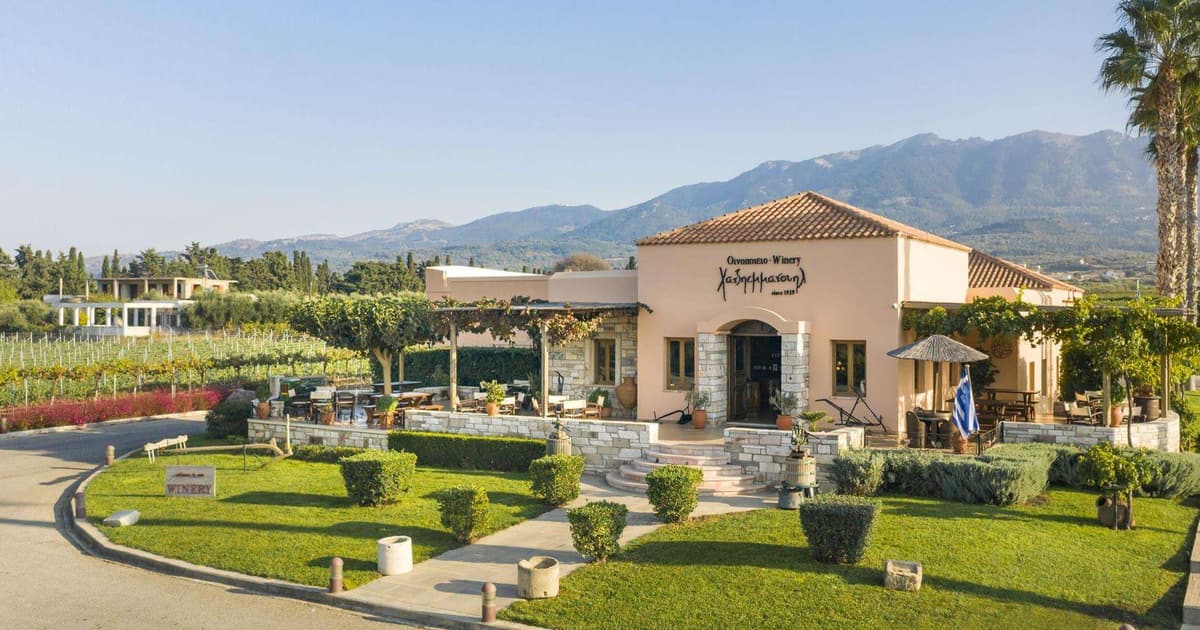
A Kos wine tasting is a visit to a winery on the island to taste its wines with local food. You travel by minibus, jeep or tuk-tuk. This post covers the formats, the places, the wines and the booking rules. The homepage lists more Greece Tours like this one.
Each tour card below opens a live GetYourGuide booking. Dates, pickup points and group sizes are shown there.
What is a Kos wine tasting and who books it?
A Kos wine tasting is a visit to a winery on the island to taste its wines with local food. The formats run from a winery tour with transport to a private island tour that adds tastes along the route.
A Kos wine tasting centres on wines made on the island. They are poured at a winery, and local food comes with them. The formats differ in the number of stops, the way you travel and the extra products that join the wine. Each format below is described on its own.
If you plan to cross into Turkey as well, the homepage also lists Turkey tours.
The first format is a wineries tour with tastings and transport. Pickup is available on this tour. A driver takes you from winery to winery, so nobody at the table has to drive. For a Kos wine tasting of this type, you only need to reach the pickup point.
The second format is a tour of two wineries. It pairs wine tasting with small bites at each stop. A Kos wine tasting like this lets you compare two cellars in one outing. You do not plan a route, because the stops are set for you.
The third format keeps you at a single winery in the Kefalos area. The tasting is guided, and the wines are paired with local delicacies. The setting is a vineyard. A premium wine experience also exists in the same area for people who want a more special version.
Another tasting at a single winery pours six local wines. Artisanal cheeses, olives, traditional bread and extra-virgin olive oil go with them. The tasting opens with an introduction to the winery and its local varieties. At this kind of tasting, the food makes a light meal as well as a drink.
A tuk-tuk tour widens the menu. It adds olive oil and aloe vera to the wine, so you meet three local products in one outing. This Kos wine tasting suits travellers who want a small vehicle and a mix of tastes, not wine alone.
A private island tour with tastes is a private group outing with pickup available. The route continues to Kefalos and a local winery. There you taste carefully selected Kos-made wines. You also learn about local production methods and the stories behind each vineyard. That makes it a Kos wine tasting with a lesson built in.
Another private tour joins wine, olive oil and honey. It includes a tasting and education session at a winery. It also has a village exploration in Kefalos and a guided tour of an olive oil factory. Coffee, tea, snacks and local desserts are provided throughout the journey.
Couples and private parties suit the private tours, because the group is theirs alone. Friends and food lovers suit the two-winery outing or the tasting with cheese, olives and bread. Travellers without a car suit the formats with pickup. In every format the stops are fixed. You choose the style.
Before you pick a Kos wine tasting, compare what each card lists. Look at pickup, the products served and whether the tour visits one winery or two. These three points separate the formats more clearly than the name does. Then match the format to your group.
Where does a Kos wine tasting take place on the island?
A Kos wine tasting takes place inland and in the south of the island. The vineyards lie at the foot of the Dikeos mountain, at an altitude of 300 metres. The nearby villages are Pyli, Zia, Antimachia and Kefalos.
Kos is an elongated island, about 45 kilometres long. It covers 295 square kilometres and has a coastline of 112 kilometres. The map of the island shapes every Kos wine tasting. The vines grow where the land rises, not along the shore.
The south-east coast of Kos is mountainous. Dikeos is the highest peak on the island and rises to 846 metres. That is almost 2,800 feet. Vineyards sit at the foot of this mountain, at an altitude of 300 metres, which is 980 feet.
Wine has never been the main source of income for the people of Kos. Even so, vines have grown here since antiquity. That is why the vineyards are small farms at the foot of the mountain. They are not a wide wine region that covers the whole island.
Pyli is the closest village to the port in this list. It lies 15 kilometres south-west of Kos Town. Zia lies 16 kilometres south of the town. A drive to either village leaves the flat coast behind and climbs towards the hills.
Zia stands against the southern slopes of Dikeos, among pine forests. A Kos wine tasting that includes this side of the island therefore has the mountain as its backdrop. The pines give the countryside a dark green edge above the vine rows.
Antimachia lies 23 kilometres south-west of Kos Town. It stands in the south of the island. The village is built on a small bluff in the centre of the island. Roads from the coast reach it across open farmland.
Kefalos sits on the southern side of the island, on top of a hill. It looks over Kefalos bay. For a Kos wine tasting in this part, the sea is in view as well as the vines. The area is the far end of the route from the port.
The area decides the stop list. A tour that visits a winery at the foothills of the mountain includes a visit to the wine cellar. So pick the part of the island first, and then the format.
The setting of a tasting is outdoors. At one winery the visit includes a tour around the vineyard. Guests then sit on a veranda with a view of the landscape.
At another winery, tables stand where guests overlook the vineyard itself, and the view runs across the vines and beyond. At a third, the cellar visit comes before the seating outside.
Travellers without a car are covered too. On a private format, the pickup is from your hotel or from anywhere on Kos, at a time you choose. A Kos wine tasting like this can start from any base on the island.
Which wines and grapes does a Kos wine tasting pour?
A Kos wine tasting pours white, rosé and red wines made from Greek and international grapes. Assyrtiko, Malagouzia, Syrah, Merlot and Cabernet Sauvignon all grow on the island. Wine from Kos was already popular in ancient times.
Wine has played a central role in everyday Greek life for more than 4,000 years. On Kos, people have made wine since the days of Hippocrates. A Kos wine tasting therefore belongs to a very old habit on the island, even though the bottles are newer.
The ancient wine of Kos had its own name, Koios Enos. It was popular in ancient times. It did not come from Merlot, Sauvignon Blanc or Malagouzia, which grow on the island today. The modern glass in your hand holds a different list of grapes from the ancient cup.
Modern bottling on the island began in the year two thousand and three. Kos is also included in the Greek Protected Designation of Origin label. That label protects the wine-making identity of the island. On a Kos wine tasting, the bottles you try belong to this young but protected tradition.
Local growers work with nutrient-rich soils. They look after both indigenous and international varieties. White wines carry a large part of the list. Assyrtiko is a precious variety with a distinctive character. It suits the mild Aegean climate and shows a fruitier side on Kos. A Kos wine tasting that opens with this white sets a fresh tone.
Malagouzia is the second white grape, and it also grows on the island today. Wines made from it are savoury and stand out for their vividness and complexity. They differ from the fruitier Assyrtiko. Pouring the two side by side shows how far white wine from one island can vary in style.
Reds follow the whites. Local reds from Syrah, Merlot and Cabernet Sauvignon are rich in flavour, elegant and balanced. They go well with meat dishes. Mandilaria is a red grape with a deep, intense colour and robust tannins. Tannins are the dry, grippy feel that red wine leaves on your tongue.
Mavrothiliko is a local red variety that was nearly extinct until its revival. If a cellar pours it, you taste a grape that almost vanished from the island. A Kos wine tasting with local grapes like this one gives you something you cannot easily find elsewhere.
Tastings run from light to heavy, so the order follows colour. On one winery visit, a cellar tour comes first. Then three wines are poured: white, rosé and red. Cheese, meats and olives come with them. After the three wines, you choose one for a full glass.
The setting changes from winery to winery. On another tour, the visit starts with a short talk inside the winery. The tasting then takes place outside, next to a grape field, with snacks. A Kos wine tasting of this kind ends among the vines themselves.
Wine is not the only local product on the table. In antiquity, Kos was called the garden of the Aegean, when it exported fruit, vegetables and olive oil. A private three-hour Kos wine tasting covers wine, olive oil and honey in one visit.
What rules and booking terms come with a Kos wine tasting?
A Kos wine tasting lasts one hour at a single winery. On a tuk-tuk tour it runs four and a half hours. Formats differ in length, group size and transport, so compare those three points first.
Length is the first point to compare. The tour of two wineries lasts three hours. A tasting at one winery in the Kefalos area lasts one hour. The tuk-tuk tour from Pyli runs four and a half hours. Pick the slot that fits your day.
The three-hour wineries tour splits its time between two stops. The first tasting lasts 45 minutes and the second lasts 105 minutes. A coach ride of 10 minutes links the two stops. This Kos wine tasting format leaves time to sit and talk rather than hurry.
The same tour also starts with a coach ride of 30 minutes. That ride is part of the three hours. On this tour, guided visits at both wineries cover winemaking. Plan your day around the full length, not only the time with a glass in hand.
Hotel pickup and drop-off come with the wineries tour. On the private local tasting of wine, oil and honey, the supplier tells you the exact pickup time. Know your hotel name before you book. Keep a phone number ready as well, so the driver can reach you.
Nobody drives on a tour with a driver and hotel pickup. That matters for a Kos wine tasting, since you try more than one wine. The one-hour Kefalos tasting is a different format. Ask how you reach the winery before you pay.
Group size depends on the format. The one-hour Kefalos tasting and the sunset tasting from Pyli are both small group tours. The local tasting of wine, oil and honey is private and takes one to six guests. It lasts three hours and uses an air-conditioned minivan.
The sunset tasting from Pyli lasts two and a half hours. That makes it shorter than the tuk-tuk tour and the wineries tour. Travellers who want an evening outing can look at it first. A Kos wine tasting at sunset also suits a day spent on the beach.
The three-hour wineries tour is listed as wheelchair accessible. The private local tasting is suitable for all fitness levels, and infant seats are available on it. For any other format, ask the provider before you pay. A Kos wine tasting is only easy if the access suits you.
The host on the wineries tour speaks English, and so does the host of the private local tasting. If your group speaks another language, check the language line on the booking card. Everyone needs to follow the host during a Kos wine tasting.
Snacks come with the private local tasting, and a driver takes you there and back. Pack a short checklist before you leave the hotel:
- Hotel name and your phone number
- Water
- Sun cream
- Comfortable shoes for vineyard paths
Check live availability on the booking card for your date. Read the cancellation line there too, since each format sets its own terms. Book the Kos wine tasting that matches your group and your hours.