Hagia Sophia tickets are the entry passes and skip-the-line listings for the great domed building in Sultanahmet, Istanbul. This post covers the pass, the entrance, the dome, the mosaics and the visit rules. The homepage lists more Greece Tours for the Greek islands.
Each tour card below opens a live GetYourGuide booking. Entry slots and audio options are shown on each card.
What do Hagia Sophia tickets cover and who needs one?
Gallery admission is what a pass buys at the Hagia Sophia Grand Mosque in Istanbul. Foreign visitors need one, and travellers with Hagia Sophia tickets reach the upper floor, the visitor route. Worshippers keep the prayer floor below and need no ticket.
The official name is Hagia Sophia Grand Mosque, and the Turkish name is Ayasofya. Hagia Sophia means Holy Wisdom. The building began as a church, later served as a mosque, then became a museum, and has mosque status again. That change of use shapes a visit with Hagia Sophia tickets. Prayer takes one level, and visitors take another.
For more days in Turkey, the homepage lists Turkey tours across the old cities and the coast.
The ground floor is the prayer floor. Worshippers who come to pray use that level, and no ticket is part of their visit. The upper galleries are the part opened to visitors. The Turkish culture and tourism ministry prepared that gallery floor for people who come to see the building. It works as a separate visitor route.
A visitor with Hagia Sophia tickets sees the whole prayer hall from above, on the gallery floor. The ministry states that visitors on the gallery route also see the Ottoman-period additions to the building. The same route lets them study the Byzantine mosaics. Mihrabs, a minbar and muezzin lofts were added inside the mosque in the sixteenth and seventeenth centuries.
Foreign visitors who come to see the building need a ticket for the gallery route. The upper gallery is the part that needs a ticket. The route welcomes visitors of every faith. Worshippers on the prayer floor stand outside that ticket system. A museum pass is not valid on the gallery route, so holders still buy a ticket.
The ministry lists a separate museum, the Hagia Sophia History and Experience Museum, in the Defter-i Hakani building. That building stands on Sultanahmet Square. The museum covers the Byzantine and Ottoman periods of Hagia Sophia in thirteen halls. Visitors buy its ticket on its own, and the ticket does not give entry to the mosque gallery.
An audio-visual experience fills the top two floors of the museum. The Roman period sits on the third floor and the Ottoman period on the second. The first-floor exhibition has sections named the Cathedral, the Mosque, the Museum and the Mosque again. Visitors who want the mosque itself still need the gallery ticket.
Sellers list the gallery route as entry only, as skip-the-line entry, as entry with audio and as a combined pass. Entry only is the plain ticket for the gallery route. One skip-the-line format adds an audio guide to the entry. On that format, a traveller with Hagia Sophia tickets gets the visiting area and upper gallery, not the prayer area.
A combined pass joins sights in one purchase. A buyer with Hagia Sophia tickets gets the upper gallery only on that pass. The ground floor stays reserved for worship. One city pass lists gallery entry with a guided tour. One combined listing lets the buyer add a Topkapi Palace ticket as an option. That palace option excludes the harem section.
A buyer comparing listings with Hagia Sophia tickets starts by finding which floor the description covers. The gallery formats cover the upper floor. The museum ticket covers a separate building. The prayer floor stays with worshippers, and combined passes add other sights and audio. That one check separates a gallery ticket from a museum ticket and from a prayer visit.
How do Hagia Sophia tickets work at the entrance and the security check?
Every visitor passes an airport-style security check at the entrance, whatever ticket is held. A skip-the-line format for Hagia Sophia tickets removes only the ticket-booth queue, not the security line. The code or voucher is shown at the door.
All visitors must go through airport-style security on entry. No one can skip the security check line, and a ticket gives no priority access through it. The security check for Hagia Sophia tickets applies to pre-booked and skip-the-line formats as well. Even with a skip-the-line ticket, the check can still take time during busy periods.
A neighbouring topic is 5 Day Istanbul Tour Package.
The entrance has separate lines for ticket purchase and for security checks. An online ticket skips the ticket-office line, not the security line. The gallery entrance has a line of its own, apart from the other lines. That queue is longest between ten in the morning and two in the afternoon. By noon it is slow-moving.
Lines form at the security checkpoints during peak seasons. The security wait for Hagia Sophia tickets takes up to half an hour in the peak season. Part of the security queue waits outdoors, so the weather matters on the day. Early arrival leaves time to clear security and find the correct entrance.
Tourists use a dedicated entrance, and signs marked Visitor Entrance point the way to it. The ticket booth, ticket control and security screening stand together at that door. Tickets can be secured online in advance, or bought at the on-site ticket booth by the tourist entrance.
The online route skips the booth queue and keeps only the security line. The on-site route adds the longest wait, because the ticket queue at the booth grows long in the peak season. A voucher bought ahead therefore saves the booth wait, not the security wait.
On one voucher format, the visitor shows the voucher at the tourist entrance and goes on to security. That format involves no queue at the ticket booth. A voucher for Hagia Sophia tickets works from a phone screen, and printing is not needed. On a guided format, the phone voucher is shown at the starting point.
The QR code for Hagia Sophia tickets works at the tourist entrance near Topkapi Palace on one skip-the-line format. The visitor shows the ticket and enters alone, because no one meets the buyer on site. The ticket skips the ticket office but gives no priority at security. The buyer checks the inbox and the spam folder for the email.
A further format sends the visitor to the Hagia Sophia entrance with the QR ticket from the confirmation email. On a multi-site pass, the QR ticket is shown at each site’s entrance. The combined pass for Hagia Sophia tickets accepts only the emailed ticket at the gate. A booking-platform voucher is not accepted there.
Large bags, suitcases and oversized luggage are not allowed inside. Arriving with minimal belongings speeds up the screening, so visitors carry only a small bag to the security check. The visitor route has no restroom, cafe or cloakroom. Visitors use the facilities around Sultanahmet Square before entering.
Hagia Sophia is partially wheelchair accessible via ramps. The ground-floor prayer hall is step-free, but access to the upper galleries is limited. The route up to the galleries is not fully suited to wheelchairs or pushchairs. One guided format is not suitable for wheelchair users.
What do skip-the-line Hagia Sophia tickets change about the queue?
Skip-the-line tickets let a visitor bypass the ticket booth queue, yet the security check still applies to every guest. Fast-track passes and guided formats follow the same rule on Hagia Sophia tickets booked online. Guests arrive ahead of the entry time.
Skip-the-line access comes in two shapes: a fast-track ticket, or a place inside a guided tour. The voucher carries the holder past the ticket booth queue and straight to the screening. The saving on Hagia Sophia tickets sold as fast-track passes is the purchase queue, nothing else. Pre-booking cuts waiting time, yet the screening still follows.
Related page: West Turkey Tour Package.
Security stays outside the product. On one entry-ticket format, skip-the-line entry counts as included, while priority access through the security lines counts as excluded. On another format, waiting at the checks shifts with visitor numbers through the day. Two separate queues exist, and only the first, at the ticket booth, is skipped.
The fast-track format booked online in advance carries a confirmed time slot, so the visitor knows the entry time beforehand. The advice on Hagia Sophia tickets booked ahead is to arrive fifteen to thirty minutes before the scheduled entry time. That margin leaves room for the screening.
Delivery on Hagia Sophia tickets differs by format. One voucher is emailed to the buyer soon after booking. Another entry ticket sits in a phone app right after purchase, with no paper printout needed. A third format sends the entry code only on the day of the visit, before the start time.
Mobile tickets are accepted, so a paper printout is not needed. On one guided format, valid photo ID goes with the phone voucher when the holder checks in. A QR code on the phone serves as the proof on another guided format, again without any printing.
On one pass, the voucher gives the starting point details and specific instructions. One guided format meets guests at a café in front of a museum. Another format checks guests in at a desk inside a café next to the entrance. The meeting point on Hagia Sophia tickets sold as tours shifts with the format.
One option sends a host to meet the visitor outside the building. Lead time differs from format to format. One format sets the advance arrival at ten minutes. On a guided format, guests are due at the meeting place at least fifteen minutes ahead of the activity. A format with staff at the meeting point asks for thirty minutes.
A guided group gathers at the meeting point, where the guide waits for the guests. The security check comes before entering. The self-paced entry pass leaves the speed to the visitor once the visit starts. The same screening applies on Hagia Sophia tickets issued as group places or as solo passes.
Fast-track does not mean guided. On one entry pass, a place in a guided group is added only when the buyer picks the tour upgrade. At another checkout, the ticket alone and the ticket plus a guided tour appear as separate options. The early arrival is meant to avoid delays at the meeting point.
A voucher is not always the entry ticket. On one meeting-point format, staff check the mobile voucher at the meeting point. The mosque ticket itself arrives in a separate email, so the buyer holds two documents for one visit. On one guided format, the guide holds a white flag at the meeting point.
How do Hagia Sophia tickets with audio add commentary to the visit?
Commentary reaches the visitor through Hagia Sophia tickets. Audio plays as a digital recording on the visitor’s own smartphone, opened by a QR code or a link. The entrance format with audio offers 25 languages and has no live guide.
A phone does the work. On the entrance format with audio, the commentary is a digital recording opened by a QR code. It is not a physical device. The combined three-site pass states the same: audio works on the smartphone, and no device is handed out. Audio travels through Hagia Sophia tickets. Visitors open it on a phone.
Language lists differ by format. The entrance format with audio names 25 languages, and a second listing gives the same figure. The combined three-site pass names five: English, German, French, Italian and Spanish. A stand-alone audio listing also names five, with Turkish in place of German. Read the list on the exact listing before buying.
Another page on a similar theme: 9 Day Cheap Turkey Bus Tour From Istanbul.
One entrance format needs internet on the phone to fetch the QR ticket. Sellers advise a download before arrival, because Wi-Fi at the site can be unreliable. Offline playback matters for audio through Hagia Sophia tickets. Stand-alone apps work offline, and one needs no cellular coverage. That app plans for poor network performance inside the building.
Length differs by product. One stand-alone audio listing gives a duration of 45 minutes and lists the entry ticket as excluded. A stand-alone phone app counts almost 30 stops and over 50 minutes of audio. The two figures describe two products, not one building. The app’s commentary covers the history and notable features of the site.
Earphones come from the visitor. The combined three-site pass lists headphones as not included, and one skip-the-line format reminds buyers to carry their own. A stand-alone audio listing tells buyers to use their own smartphone and headphones. Audio through Hagia Sophia tickets drains the phone battery, says one seller, and photos add to the drain.
One format adds augmented reality to the audio. The content is downloaded before arrival. On site, the visitor scans QR codes with the camera. A digital 3D model of that exact place in history follows. The format asks buyers to bring headphones and a fully charged smartphone. Its audio comes in eight languages, including Russian, Portuguese and Turkish.
Visitors choose between a person and a recording through Hagia Sophia tickets. Audio listings state no live guide, and a guided tour is a separate purchase. A live-guided format adds a person who answers questions, says one seller. Its headsets carry the voice through a crowd. The recording has neither.
A hybrid format joins both. It pairs a 60-minute highlights tour from a licensed guide with an audio guide app on the visitor’s own smartphone. The tour runs in English, and the app comes in English, German, Italian and further languages. Download instructions sit on the voucher after purchase.
Pace belongs to the listener. One listing lets a visitor explore slowly for as long as they like. Audio through Hagia Sophia tickets starts at the visitor’s own pace, says another listing. Seller pages add that recordings can be paused and replayed. One self-guided audio format plays in a browser or in its app.
Instructions arrive by email. On the combined three-site pass, tickets and audio come as a QR code one day before the visit. Same-day orders are sent at once. Another audio listing shows the link to a separate app on the emailed voucher. One skip-the-line listing validates tickets at the Hagia Sophia entrance. The visitor then downloads the audio app.
What can visitors see outside the building before buying Hagia Sophia tickets?
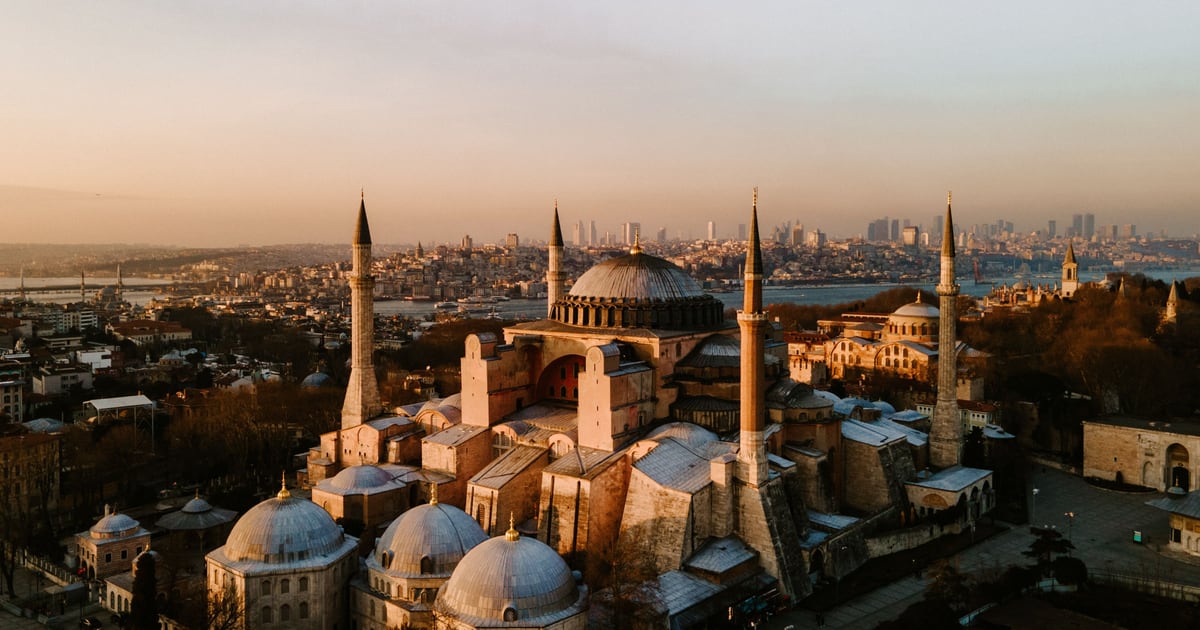
Walking round the outside without Hagia Sophia tickets, visitors meet flying buttresses, four minarets and the tombs of sultans. The minarets were an Ottoman addition and not part of the original Byzantine design of the church.
Marble once wrapped the outer walls. The exterior of the Byzantine church was covered with marble veneer. Marble pieces and fixings for lost panels remain on the western face. The white marble cladding gave the building a shimmering look. Restoration work by the Fossati architects later clad the walls in stucco tinted yellow and red.
Flying buttresses lean against the west side, in plain view of anyone without Hagia Sophia tickets. Builders of the Byzantine era raised them, although a common belief credited the Crusaders. Emperor Andronicus II ordered four extra buttresses for the eastern and northern sides in the early fourteenth century.
8 Day Istanbul Cappadocia Ephesus Pamukkale Tour is a close match for this topic.
Ottoman builders added more support from the outside. Selim II appointed the architect Sinan to maintain and repair the building. Sinan strengthened the walls with structural supports, and his buttresses helped the building withstand earthquakes over the centuries. A protective zone about twenty-four metres wide was set around it, and the houses inside that zone were pulled down.
Four minarets, added at different times, stand in view of walkers without Hagia Sophia tickets. Wood came first. Under Sultan Mehmed the first minaret was built of wood, and under Bayezid II the second was built of brick. Repairs in the nineteenth century altered the minarets so that all four stood at equal height.
The four minarets differ in material. Red brick forms one minaret, while white limestone and sandstone form the other three. The two western minarets are identical, and each stands sixty metres high. Sultan Selim II commissioned that pair from the chief architect Sinan. Repairs in the fifteenth, sixteenth and nineteenth centuries added ornaments and details to the minarets.
A walk outside without Hagia Sophia tickets starts with the complex of Sultan Mahmud I. In the eighteenth century he added a Koranic school, a soup kitchen for the poor and a library. A fountain for ritual washing followed. Together these buildings turned the mosque into a complex, called a kulliye in Turkish.
The complex also holds the tombs of three sultans, Selim II, Murad III and Mehmed III. Sinan built the tomb of Selim II in the sixteenth century. That tomb later became the site of forty-three princes’ tombs. The court architect Davud Aga built the tomb of Murad III. The eight-sided tomb of Mehmed III was built beside it.
A look at the grounds without Hagia Sophia tickets includes the rotunda. Banded masonry forms its lower two levels, and plain brick forms the third. It replaced an older skeuophylakion in the fifth century. The sources suggest this rotunda served as a treasury for liturgical objects. A baptistery accompanied the church, and Mustafa I turned it into his tomb.
A clock building, the Muvakkithane, was built by the Fossati architects in the nineteenth century for the mosque’s timekeeper. In the sixteenth century Sinan built the Cafer Aga madrasah, a Koranic school, below the forecourt of Hagia Sophia. The church itself stands in Sultanahmet, a neighbourhood in the district of Fatih.
Anyone without Hagia Sophia tickets finds the Fountain of Ahmed III in the great square before Topkapi Palace. The square lies in front of the palace’s Imperial Gate. The fountain is a large square block of marble with five small domes. Mihrab-shaped niches carved in low relief with leaf and flower designs decorate each of its four sides.
How did builders raise the dome that Hagia Sophia tickets let visitors see?
Anthemius of Tralles and Isidore of Miletus planned the dome on four pendentives. These curved triangles send its weight to the corners. Forty windows ring its base. Entry via Hagia Sophia tickets places visitors beneath this sixth-century vault.
Two designers drew the plan. Anthemius of Tralles was a mathematician, and Isidore of Miletus was a geometer and engineer. Building began in AD five thirty-two. The church opened in December of AD five thirty-seven, five years and ten months after construction started. Over ten thousand people found work on the site.
Anthemius also wrote a treatise titled On Burning Mirrors. Isidore was a teacher of stereometry and physics, first in Alexandria and later in Constantinople. A majority of his preserved work consists of edits and commentaries on older Greek mathematical texts. He was already a renowned scientist and mathematician when Justinian hired him.
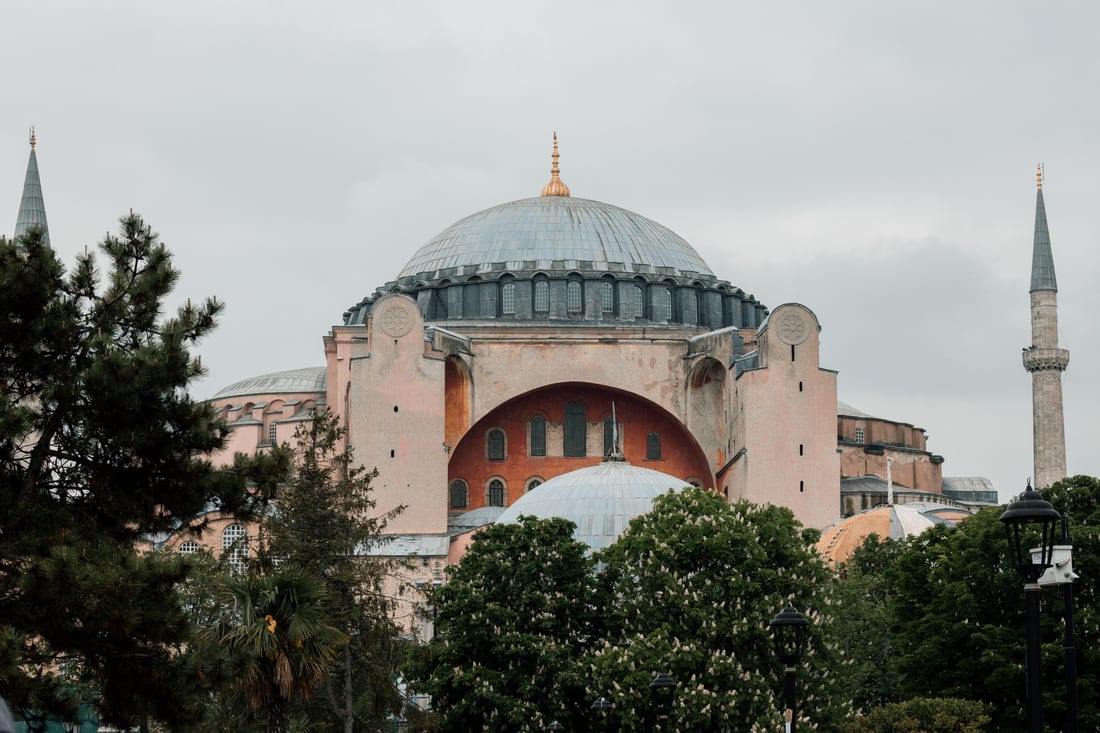
A pendentive lets builders place a circular dome over a square room. Each has the outline of a spherical triangle, pointed at the bottom and broad at the top. Four of them carry the dome that visitors see via Hagia Sophia tickets. Pendentives receive the dome’s weight and concentrate it at four corners.
For a similar plan, see Istanbul Classical Tour From Izmir.
Roman builders began to test pendentives in the second and third centuries. Before that, the corners of a room were handled with corbelling or squinches. The form reached full development in the sixth-century church, counted among the earliest buildings to adopt a fully pendentive dome.
Forty arched windows form an arcade beneath the shell. Anyone who enters via Hagia Sophia tickets sees that ring of windows from below. The central dome follows the ribbed method, which leaves room for windows between the ribs at the base. Light entering there gives the dome the look of hovering.
The elder Isidore had designed the dome that fell. After an earthquake in the middle of the sixth century, the original cupola collapsed entirely. Isidore the Younger supervised the repair. He was a nephew of Isidore of Miletus and, like his uncle, a native of Miletus.
Builders took the whole vault down and raised it about six metres higher than before. Isidore the Younger also changed the dome type, erecting a ribbed dome on pendentives. That ribbed design is the one visitors meet via Hagia Sophia tickets. Repairs in later centuries altered parts of it.
An earthquake in the tenth century collapsed the western dome arch. The Armenian architect Trdat reinforced the fallen arch. He also rebuilt the dome’s western part and fitted it with fifteen ribs. The repair took six years. Further cracks opened in the fourteenth century, and the architects Astras and Peralta carried out repairs.
The crown of the dome is about fifty-five metres above the floor. Sources differ on its exact width, though every figure lies above thirty metres. A visitor who arrives via Hagia Sophia tickets meets a very wide shell. Its height is much lower than any other dome of such a large diameter.
Arched openings at the west and east ends are extended by half-domes. Each has the same diameter as the central dome. Anyone who enters via Hagia Sophia tickets walks into a vast oblong interior crowned by the dome. Smaller semi-domed recesses called exedrae carry the half-domes.
Ashlar stone and Roman brick are the named materials. The mortar mixes sand with minute ceramic pieces, a blend also used in Roman concrete. The bricklayers laid mortar in greater quantity than brick. Because the mortar below was wet, the walls leaned outward under the weight.
Which columns and marble fill the nave that Hagia Sophia tickets open?
Green verd antique columns, purple porphyry and white Proconnesian marble fill the nave. Each holder of Hagia Sophia tickets sees stone from Thessaly in Greece, from Egypt and from Marmara Island. Verd antique bands across the floor were likened to rivers.
Marble covers the walls and the paving of the church. Paul the Silentiary recited a long poem about the building soon after its second consecration in the sixth century. He names green stone from Carystus and Laconia and a speckled stone from Phrygia. His list also holds black stone from the Celtic crags and porphyry shipped down the Nile.
The floor is mainly Proconnesian marble, quarried on Marmara Island in the Sea of Marmara. It was the main white marble of the monuments of Constantinople. The poem adds a polished Bosporus stone, black mixed with white. Bands of verd antique cross the nave, and writers compared the whole paving to a sea.
The site also covers 12 Day Turkey Tour.
Verd antique is a dark green rock, mottled with white, that takes a high polish. Roman builders quarried it near Larissa in Thessaly. Justinian’s churches used it extensively, with large single-piece columns. Holders of Hagia Sophia tickets see green shafts of it, and the poet called four of them glittering jewels.
The word porphyry comes from the Greek word for purple. The red grade came from Mons Porphyrites in the Eastern Desert of Egypt. The emperor owned those mines, so the stone was called imperial. The poem places porphyry columns in half-circle recesses, carrying golden capitals, with green Thessalian columns standing on them.
Writers once took the columns for spoils from Rome and Ephesus. Cyril Mango holds that only the Egyptian porphyry was reused for the church. Basket capitals crown the shafts and carry the monograms of Justinian and Theodora with their titles. Buyers of Hagia Sophia tickets look for those carved letters among the capitals.
The poet says the designs on the carved stone walls come from the quarries of Proconnesus. He writes that the joins of cut marble resemble painting. Veins in square and octagonal stones meet to form patterns. Purchasers of Hagia Sophia tickets study coloured marble facing on the gallery wall.
The same poem describes the lighting at night. Long chains of beaten brass hung from the cornice at the foot of the dome. Silver discs on the chains formed a ring, pierced to hold glass. A smaller ring and one central disc sat inside it. His verses let owners of Hagia Sophia tickets picture that glow.
Eight round panels of calligraphy hang in the main space. Kazasker Mustafa Izzet Efendi designed them during the repairs of the nineteenth century. Each measures seven and a half metres across, with gilt letters on a green ground. They carry the names of Allah, Muhammad, the first four caliphs and Muhammad’s two grandsons. Hangers of lime wood hold them.
The Imperial Gate, the largest door in the building, dates from the sixth century and measures seven metres. The door is oak with a bronze frame, and bronze plates coat its leaves. The Nice Door is older. Its reliefs of plants and geometric shapes date from the second century BC. It was set in place in the ninth century.
A column at the north-west of the building has a hole in its middle, covered by bronze plates. It is called the sweating column, the crying column and the wishing column. Two large urns from the Hellenistic period stand in the side naves. They came from Pergamon under Sultan Murad III, and each is carved from one block.
Which mosaics and galleries do Hagia Sophia tickets open on the upper floor?
Imperial portrait mosaics and a horseshoe-shaped gallery make up the upper floor. Among Hagia Sophia tickets, upper-floor entry leads to a gallery that wraps three sides of the nave. The surviving panels gather in its southern part.
The upper gallery, called the matroneum, runs in a horseshoe shape. It encloses the nave on three sides, and the apse interrupts it at the eastern end. Tradition reserved this floor for the Empress and her court. Among Hagia Sophia tickets, gallery entry covers a floor where the imperial household once gathered.
A long ramp rises from the northern part of the outer narthex up to the gallery. At the centre of the gallery, directly opposite the apse, lies the Loggia of the Empress. From there the empress and her ladies watched the proceedings below. A green disc of verd antique marks the spot where her throne stood.
The Marble Door stands in the southern part of the upper floor. People who took part in church synods entered and left their meeting chamber through it. Fruit and fish motifs cover its panels. Among Hagia Sophia tickets, southern-gallery access reaches the floor that holds this doorway.
Compare this with 7 Day West Turkey Tour by Public Bus From Istanbul.
Smalti, a glass tile made for Byzantine mosaics, comes from molten glass mixed with metal oxides in a furnace. The cloudy mixture is poured into slabs, cooled and broken into pieces. Pieces can be topped with gold leaf and a protective glass film. Constantinople became the centre of the craft, with Hagia Sophia as a prominent example.
Among Hagia Sophia tickets, upper-floor entry reaches the Empress Zoe panel on the eastern wall of the southern gallery. The eleventh-century panel shows Christ in the middle, robed in dark blue, against a golden ground. Constantine IX Monomachus offers a purse, and Zoe holds a scroll. Workers scraped off the earlier heads and replaced them.
The Komnenos panel, on the same wall, dates from the twelfth century. The Virgin stands at the centre in a dark blue gown. Emperor John II, in a garment set with precious stones, holds a purse. Empress Irene stands opposite, holding a scroll. Their eldest son, a beardless youth, appears on the neighbouring pilaster.
The Deesis panel dates from the thirteenth century. Among Hagia Sophia tickets, upper-floor entry reaches it as the third panel of the imperial enclosure. Mary and John the Baptist plead with Christ for humanity. It is widely considered the finest panel in the building, for its soft features and humane expressions. The bottom of the panel has deteriorated badly.
The semi-dome above the apse at the east end holds another panel, the Virgin and Child. Mary sits on a jewelled, backless throne, and the infant’s garment is set with golden tesserae. Nobody knows when it was installed. One scholar calls the mosaic a curious reflection on how little is known of Byzantine art.
The Emperor Alexander mosaic is hard to find, in a dark corner of the second-floor ceiling. The emperor wears full regalia and holds a scroll in his right hand and a cross-topped orb in his left. Plaster covered other mosaics in the building. This one was simply painted over, and the paint reflected the surrounding mosaic patterns.
Among Hagia Sophia tickets, gallery entry also reaches marble parapets with runic graffiti. The first inscription is on a parapet at the top of the southern gallery. Worn down, it leaves only -ftan, read as the Norse name Halfdan. The marks are believed to come from members of the Varangian Guard, the emperors’ bodyguards from Northern Europe.
How does the Blue Mosque pair with Hagia Sophia tickets?
Combined listings arrange the Blue Mosque pairing around Hagia Sophia tickets, adding an audio tour of the mosque. The mosque stands across from Hagia Sophia, beside the old Hippodrome, and is free to enter.
The skip-the-line combo with audio names its stops in order. The visit is built around Hagia Sophia tickets, Blue Mosque audio following as the second stop. The buyer enters Hagia Sophia first and then explores the mosque at a personal pace. That format has no fixed schedule.
The Blue Mosque is free to enter. One pass puts that fact in brackets after its audio line: entry inside is free. On both passes the Blue Mosque appears as an audio tour, not as an entry ticket.
One pass calls the two landmarks just steps apart. The same pass says the combination removes the need for transfers. The tram to Sultanahmet, on the Kabatas to Bagcilar line, serves both mosques. Visitors who plan the day around Hagia Sophia tickets, mosque audio included, use that one stop for both.
See also Istanbul Biblical Tour From Izmir.
The mosque’s site, size and six minarets suggest that Sultan Ahmed meant to rival Hagia Sophia. Hagia Sophia, already a mosque, acted as a source of inspiration for the architects. The structure blends a classical Ottoman layout with Byzantine design from its neighbour. A day arranged around Hagia Sophia tickets, Blue Mosque second, puts the older building first.
The Blue Mosque follows a classical Ottoman layout. A central dome crowns the prayer hall, four semi-domes stand around it, and six minarets flank it. On the exterior, the domes and semi-domes build up smoothly to the peak of the central dome. The finest Iznik tiles cover the gallery’s north wall, which is hard for visitors to see.
The outer courtyard has gates on all four sides. The north and east sides carry three each, and the west and south sides carry two each. Domed porticoes line the inner courtyard, and the portico on the prayer-hall side is almost level with the rest. Ritual washing takes place at taps outside the courtyard, not at the central fountain.
Carpets cover the prayer-hall floor. Worshippers donate them, and they are replaced as they wear out. The hall is designed so that everyone can see and hear the imam, except behind the large pillars. Two fountains are built into the two northern pillars. The sultan’s pavilion houses the only museum in Turkey that shows nothing but carpets.
The Blue Mosque is still in use for worship. The prayer hall opens from the courtyard through a monumental gate. It also has two side entrances on the outside, where visitors who are not Muslims enter as a rule. On the priority-entry pass wrapped around Hagia Sophia tickets, Blue Mosque audio covers the courtyard and the interior.
The land beside the mosque was once the Hippodrome, the centre of sport and social life in Constantinople. The ground is Sultanahmet Square, and the Turkish government maintains it. Nobody built over the site, though its stone served other buildings. Work in front of the mosque in the nineteen nineties uncovered seats and columns, which museums in Istanbul display.
Three monuments of the central barrier survive in the square: the Walled Obelisk, the Serpent Column and an Egyptian obelisk. The Egyptian one is pink granite, cut into three pieces for the move. Only its top section survives, on a marble pedestal. A day planned around Hagia Sophia tickets, Sultanahmet Square included, meets all three.
Why does the Basilica Cistern share a pass with Hagia Sophia tickets?
One combined pass lists Basilica Cistern entry alongside Hagia Sophia tickets. Sarayburnu, the historical peninsula of Istanbul, holds the underground reservoir. It dates to the sixth century, under Emperor Justinian I, and 336 marble columns support its ceiling.
Constantinople became the main imperial residence and soon had more inhabitants than its wells were able to supply. Builders raised large cisterns to catch water that otherwise ran into the sea. The Basilica Cistern was one of them. Its water went to the imperial palace. It is the largest underground water basin in the city.
Its Turkish name, Yerebatan Sarnici, means Subterranean Cistern in English. A second Turkish name, Yerebatan Sarayi, means Subterranean Palace. The hall stands 150 metres southwest of Hagia Sophia, and one combined pass bundles its entry alongside Hagia Sophia tickets. UNESCO includes the cistern in a World Heritage Site, the Historic Areas of Istanbul.
Water reached the hall from the Belgrad Forest, which lies north of the city. It travelled along two aqueducts. One was the Valens Aqueduct, whose arches stand in the Fatih district. The other was the Maglova Aqueduct, which Justinian built. The original Maglova span measured 115 metres.
The Valens system was a Roman water network, built in the fourth century to supply Constantinople. Inside the city, the supply filled three open reservoirs and more than a hundred cisterns below ground. A pass naming the Basilica Cistern alongside Hagia Sophia tickets points to one of those cisterns. Capacity across the whole set topped one million cubic metres.
Next on this subject: 6 Day Istanbul Ephesus Pamukkale Tour Package.
Inside, the chamber measures about 138 metres by 65 metres. The floor covers about 9,800 square metres. The ceiling rests on 336 marble columns. The grid has twelve rows with twenty-eight columns in each, and five metres separate neighbours. Each column is about nine metres high. Raised walkways carry visitors among them.
Builders took columns from older buildings, a practice called spoliation. They are cut from different types of marble and granite. Capitals are mainly Ionic and Corinthian, and the Doric ones have no engravings. One column bears raised carvings of a hen’s eye, slanted branches and tears. Its pattern resembles the columns of a fourth-century triumphal arch for Theodosius I.
A pair of columns in the north-west corner sits on blocks bearing the face of Medusa. In Greek myth, Medusa was a Gorgon with snakes for hair. Her image served as an evil-averting device, the Gorgoneion. One head lies tilted and the other is upside down. Cistern entry alongside Hagia Sophia tickets opens the hall that holds both heads.
Nobody knows where the two heads first stood. One account links them to a building of the late Roman period. Another points to the Forum of Constantine, where similar heads have been found. Nothing suggests that the blocks carried columns in an earlier life. Babylonians and Greeks believed that gorgon faces warded off evil.
Only locals who drew water from the hall remembered it. Then a French traveller, Petrus Gyllius, recorded being rowed between the columns and seeing fish beneath the boat. Repair work began in the eighteenth century under Sultan Ahmed III. A second major repair followed in the nineteenth century, under Sultan Abdulhamid II.
One combined pass with audio names three stops: Hagia Sophia, the Basilica Cistern and the Blue Mosque. Cistern entry sits alongside Hagia Sophia tickets. Validity lasts seventy-two hours, and the visits can fall on one day or three. Each site is entered once. Entry tickets for the first two come with an audio guide each.
When do Hagia Sophia tickets sell out and what do the visit rules say?
Summer, weekends and public holidays are the busy times, so booking early keeps a date on the calendar. The visit rules reach beyond Hagia Sophia tickets. Shoulders and knees stay covered, and the visitor route pauses at prayer times.
Hagia Sophia ranked second among Turkey’s museums by visitors, at almost 3.3 million in one year of museum use. Summer sets the pace for crowds. June to August counts as the high season. Winter is the quiet time, when the summer visitors are back at home. A winter date therefore meets fewer of them.
A visit plan stretches beyond Hagia Sophia tickets. Public holidays and weekends belong to the high season, and early booking is worth it on those dates. Waits run longer on major Islamic and Christian holidays and on days when cruise ships arrive. Weekends are the days to avoid if the calendar allows.
The hour of arrival counts as much as the season. Lines and crowds grow as the day goes on. Friday afternoons draw a warning of their own, because the Friday prayers fall then. One guided format runs every day except Friday. Booking as soon as possible is the way to guarantee a date.
Booking ahead answers a full calendar. Pre-booking is highly recommended at peak times. Combined passes carry live availability, and one confirms the booking at once. Each booking card on this page lets a visitor pick a date. The card shows whether that date is open.
A related page on this site is 10 Day Turkey Bus Tour.
A pass carries terms beyond Hagia Sophia tickets. Cancellation differs between passes. A guided format and a combined pass with audio allow cancellation up to the day before the visit. One skip-the-line entry ticket cannot be cancelled or moved. On another combined pass all sales are final. The card’s own line is the one to read.
Prayer breaks shape any plan beyond Hagia Sophia tickets. Certain areas stay open to visitors outside prayer times. The visitor route pauses at the five daily prayers, because Hagia Sophia is an active mosque. Friday brings the longest pause, around the midday prayer. Prayer times shift through the year, so the pauses move with them.
Courtesy at prayer time reaches beyond Hagia Sophia tickets. Voices stay low, and a phone stays silent. Nobody steps in front of a person at prayer. Pictures of people at prayer are off limits. A door closed for prayer is accepted, and the visit resumes later.
Dress rules apply beyond Hagia Sophia tickets. Modest dress is required of every visitor, regardless of gender or religion. Upper arms, shoulders and knees stay covered. Shorts, short skirts, sleeveless tops and tight or transparent clothing are not allowed. Women visitors cover their hair too, using a scarf brought from home or bought at the site.
Limits on shoes, food and cameras apply beyond Hagia Sophia tickets. Shoes come off before any carpeted prayer area. Food and drink stay outside. Walls and mosaics are not touched. Photos are allowed without flash, and tripods and drones are not permitted. Photography stops during prayer times and in designated areas.
Time inside is easy to plan. A visit needs about an hour as a floor, and ninety minutes lets a visitor see everything on site. The wait at the gate comes on top. One pass format leaves the pace to the visitor, with no fixed schedule once the visit starts.