
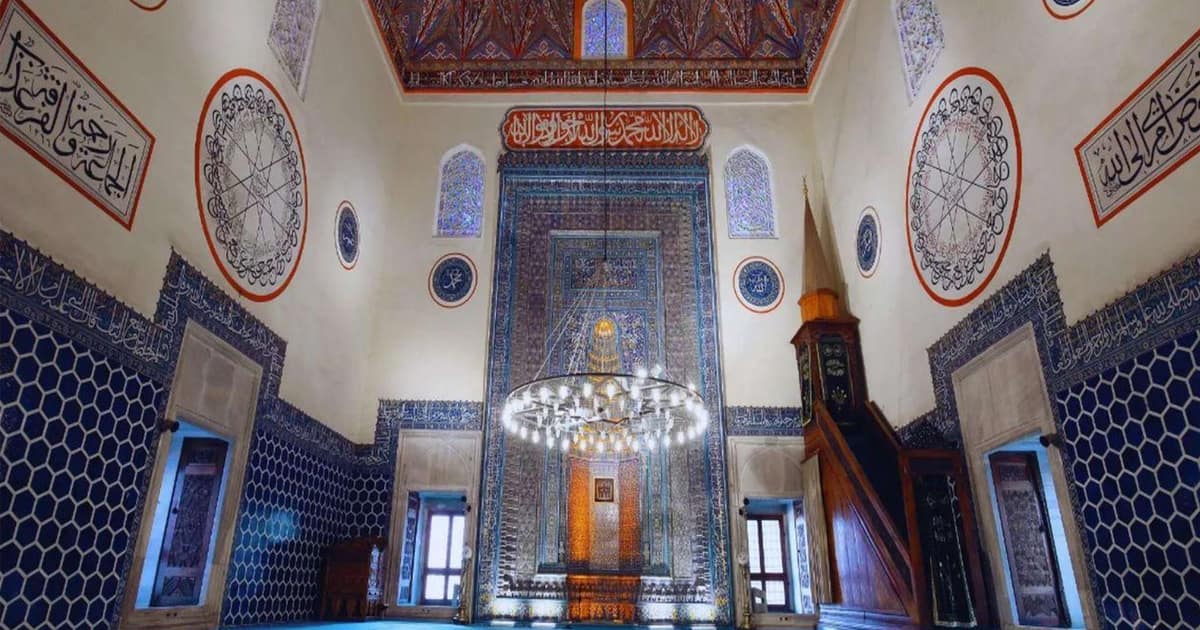
An Ertugrul Ghazi tour from Istanbul drives east to the first lands of the Ottoman beys. This route visits Bilecik, Sogut and Inegol, then rests a night in Bursa. For island trips, open Greece Tours on the homepage.
Open a card below to check live dates on GetYourGuide.
Which road, bridge or ferry leads out of Istanbul for an Ertugrul Ghazi tour from Istanbul?
Leaving Istanbul eastwards, the O-4 Anatolian Motorway runs through Kocaeli and Sakarya, and the D.650 state highway then reaches Bilecik. A bridge and a ferry give two ways back across the water. That suits an Ertugrul Ghazi tour from Istanbul planned as a two-day loop.
Istanbul is Turkey’s largest city and straddles the Bosphorus. Roughly two-thirds of its residents live on the European side, with the rest in Asia. The city occupies the land between two seas, the Marmara and the Black Sea. The first morning of an Ertugrul Ghazi tour from Istanbul begins there and points east, towards Anatolia.
For other regions, Turkey tours on the homepage cover Cappadocia, Ephesus and Pamukkale.
This route is a loop of two days and one night. Day one runs east by road through Kocaeli and Sakarya to Bilecik, Sogut and Inegol. One night follows in Bursa. The second day stays in the city and ends with the road back to Istanbul. So Istanbul has two jobs: the way out and the way home.
The O-4 is the Anatolian Motorway, called Anadolu Otoyolu in Turkish. It links eastern Istanbul and the northeastern shore of the Sea of Marmara with Ankara. On its way it crosses Istanbul, Kocaeli, Sakarya, Duzce, Bolu and Ankara provinces. An Ertugrul Ghazi tour from Istanbul crosses Kocaeli and Sakarya first, the two provinces after Istanbul.
The state highway between Adapazari and Bilecik is the D.650. It begins at Karasu on the shore of the Black Sea and finishes at Antalya on the Mediterranean shore. On the way it crosses the provinces of Sakarya, Bilecik, Kutahya, Afyon, Burdur and Antalya. Only its Sakarya and Bilecik section matters here.
Published distances from Istanbul to Bilecik and Sogut differ by tens of kilometres, so none is quoted. Route planners agree on one figure: Bursa lies a little over 150 kilometres from Istanbul by road. Drive-time estimates run from an hour and a half to two hours without stops. From Bilecik, Sogut lies about 30 kilometres to the southeast.
The Osman Gazi Bridge carries the O-5 motorway across the Gulf of Izmit and links Gebze with Yalova Province. It spans the gulf at its narrowest point, and its main span is 1,550 metres long. For the closing stretch, an Ertugrul Ghazi tour from Istanbul can cross by this bridge on the way home.
The O-5 begins at Gebze in Kocaeli. From there it crosses the Gulf of Izmit on the Osman Gazi Bridge and runs towards Bursa. Its exit list names Yalova and Izmit at Altinova, and Orhangazi and Iznik at the Orhangazi junction. Beyond Bursa the same motorway runs on to Balikesir and Izmir.
Regular ferries connect Yalova with Istanbul across the Sea of Marmara. A car ferry also links Eskihisar in Gebze with Tavsanli in Yalova and saves the drive round the gulf. Bus and ferry services run between Bursa and Istanbul as well. A choice of routes therefore opens up when an Ertugrul Ghazi tour from Istanbul heads home.
The road out of Istanbul is one motorway and one state highway, the O-4 and the D.650. Going home, the O-5 crosses the bridge, and ferries run from Yalova to Gebze and to Istanbul. These links form the Istanbul end of an Ertugrul Ghazi tour from Istanbul. Bilecik, Sogut, Inegol and Bursa carry the rest of the loop.
What do Kocaeli and Sakarya show along an Ertugrul Ghazi tour from Istanbul?
Kocaeli and Sakarya form the first stretch of an Ertugrul Ghazi tour from Istanbul. They offer Gebze, Izmit, Lake Sapanca, the Sakarya River and the Geyve gorge, passed on the road rather than visited.
Gebze sits on the Gulf of Izmit, the eastern arm of the Sea of Marmara. Pliny the Elder and Plutarch place the tomb of Hannibal, who died in the second century BC, at Libyssa. Earlier scholars linked that town to Gebze. So an Ertugrul Ghazi tour from Istanbul passes ground tied to the end of Hannibal’s life.
Modern reference works place Libyssa at remains near Diliskelesi, in Gebze district. The site has not been extensively excavated, and nobody has securely identified the ancient tomb. A memorial raised on the order of Mustafa Kemal Ataturk stands near the traditional site. It does not mark a proven grave.
Gebze also holds an Ottoman complex on a hill north-west of the town. Coban Mustafa Pasha built it in the early sixteenth century. It joins a mosque, a tomb, a madrasa, a soup kitchen, a library and a caravanserai. Gebze is a district of Kocaeli that an Ertugrul Ghazi tour from Istanbul crosses on day one.
Izmit is the capital of Kocaeli Province and stands on the site of Nicomedia. Nicomedes I of Bithynia rebuilt the city under that name in the third century BC. Diocletian made it the eastern capital of the Roman Empire in the late third century AD. An Ertugrul Ghazi tour from Istanbul passes this Roman capital on its way east.
Constantine the Great died in an imperial villa near Nicomedia. The historian Arrian was born in the city. Kocaeli is known as the industrial centre of Turkey, and the size of the gulf supports extensive port facilities. Gebze is its largest district by population.
Lake Sapanca lies beyond Izmit, in a tectonic hollow between the Gulf of Izmit and the Adapazari plain. The Istanbul to Ankara motorway follows the southern shore beside the railway. The E-5 highway runs along the northern shore. Pine, hornbeam and oak cover the hills. The lake adds scenery, not a stop, to an Ertugrul Ghazi tour from Istanbul.
The province takes its name from the Sakarya River, the third longest river in Turkey. Its ancient Greek name was Sangarios. The river rises on the Bayat plateau north-east of Afyon and reaches the Black Sea across the Adapazari plains. Its deposits built the plain in Sakarya, a province that an Ertugrul Ghazi tour from Istanbul crosses on day one.
Near Adapazari stands the Sangarius Bridge, built under the emperor Justinian I and finished in the sixth century. It has seven main arches and five more that served as spillways. The bridge stood on the old military road from Constantinople. Today the river runs about three kilometres to the east of it.
Geyve stands at the foot of the Geyve gorge, which runs between two mountain ranges along the Sakarya River. The town lay on the historical Silk Road, and Ottoman sultans kept its old bridge at Alifuatpasa in good repair. Orchards around Geyve are known for quince, cherries, apples, peaches and grapes.
Between Inhisar and Osmaneli the Sakarya cuts through gorges named Hamitabat, Seytankaya, Darca and Pasalar. A university study of the river terraces ties their cutting to regional uplift. Osmaneli, a town of Bilecik Province, was Leukai in antiquity and Lefke later. It stood on the road from Nicaea to Dorylaion. Bilecik district lies to its south.
What do the castle and old houses of Bilecik add to an Ertugrul Ghazi tour from Istanbul?
Bilecik adds a town built around a Byzantine-age castle rock, with restored Turkish houses, a museum and a marble trade. These features give an Ertugrul Ghazi tour from Istanbul a town of Byzantine origin and Ottoman growth.
Bilecik lies in hilly country in the valley of the Karasu. Hills and deep valleys dominate the province around it. The old centre stands on a rocky outcrop between two small streams. The town began to grow around its castle, but the shape of the land stopped it from spreading far.
Only the foundations of a Byzantine fortress remain on the rocky peak above the town. The castle is known as Belekoma, and the Byzantines made it a defensive centre of the district. A ladder carved into the rock leads up to it, and the partly restored site gives views over the town.
The fortress changed hands around the end of the thirteenth century. Osman Bey took Belekoma and added Bilecik to Ottoman land. Later chronicles tell the story in semi-legendary form. Bilecik then became one of the earliest Ottoman administrative centres. That makes it an early Ottoman town on this Ertugrul Ghazi tour from Istanbul.
The town is known for its restored Turkish houses. They add a note of daily life to an Ertugrul Ghazi tour from Istanbul full of castles, tombs and mosques. Panels in the corridors of the city museum show further examples of civil architecture found in Bilecik.
The city museum is split into three main halls. Its archaeology halls hold finds from the Palaeolithic period up to the Byzantine age. Settlement in the area dates back to prehistoric times, so the cases cover a long span before the Ottomans.
The ethnography halls show scenes from the founding of the Ottoman state and from tent and home life. Objects and weapons used by Oguz Turks are on display as well. For an Ertugrul Ghazi tour from Istanbul, these rooms set the dynasty’s early years beside everyday objects.
Stone is the trade that links Bilecik to Istanbul. The region’s natural stone was used in Italy and Istanbul in the Roman period. It went into historic buildings of Istanbul in the Ottoman period too. An Ertugrul Ghazi tour from Istanbul therefore reaches a quarry region whose stone already stands in the starting city.
The province is one of the leading regions for block stone in north-west Asia Minor. The beige group is made of oolitic, fossil-bearing and reef limestones that formed in shallow seas. Quarries make a great contribution to the economy of the province. The largest marble beds lie in the districts of Bozuyuk and Pazaryeri.
The province holds reserves of clay, kaolin and feldspar, which feed its ceramic and glass industries. Ceramic, brick and metal works are also important to the local economy. Porcelain is a strong product as well. These industries show a working Bilecik of today beside the historic one on an Ertugrul Ghazi tour from Istanbul.
This route reaches Bilecik first and then moves on to Sogut on the same day. Castle, houses, museum and stone give the town its own place in that day, apart from the tombs. Inegol and the night in Bursa come after Sogut. The province itself is called the birthplace of the Ottoman Empire.
How did Osman I turn a frontier beylik into a state before an Ertugrul Ghazi tour from Istanbul?
Osman I, the son of Ertugrul, led a small frontier beylik near Sogut. He took forts such as Bilecik and Yarhisar and beat a Byzantine force at Bapheus. An Ertugrul Ghazi tour from Istanbul passes the towns behind those gains.
Osman took over his father’s beylik late in the thirteenth century. This small principality, like its neighbours, appeared after the Seljuk sultanate of Rum broke apart. It lay in Bithynia, on the Byzantine frontier, and Sogut was its base. From there Osman followed a plan of adding to his lands at the expense of the Byzantines.
The record of these years is thin. No written source survives from Osman’s reign. The Ottomans set down his life in the fifteenth century, over a hundred years after his death. Anyone on this Ertugrul Ghazi tour from Istanbul can tell two kinds of record apart. One is later chronicles. The other is Byzantine writing from his own time.
Bilecik stands among his earliest gains, since by the end of the thirteenth century his conquests included its area. His men entered the fort, overpowered its small garrison, and the fortress fell. Kopruhisar was another outpost taken in those years.
Osman also rode towards Yarhisar and took it by surprise. To the west, the Inegol area passed from Greek lords to the Ottomans. Accounts of the siege of the Inegol fort differ in their details. Those towns explain why an Ertugrul Ghazi tour from Istanbul reaches beyond Sogut. The story of the beylik runs through all of them.
Yenisehir was the first significant city that Osman captured, and it became the first Ottoman capital. The state and its dynasty of rulers are named after him. Both facts show how a band of frontier warriors grew into a government with a seat of its own.
The decisive clash was the Battle of Bapheus, a place the Ottomans called Koyunhisar. Sources set the site near Nicomedia, though historians have not fixed it exactly. A Byzantine force of about two thousand men, led by George Mouzalon, marched against Osman. It included Alan horsemen.
Sources give the day as 27 July and differ on the year. On the Ertugrul Ghazi tour from Istanbul the safe wording is the turn of the fourteenth century. The Ottoman cavalry broke the Byzantine line, and Mouzalon withdrew to Nicomedia. The chief record of the fight comes from the Byzantine historian George Pachymeres.
The Byzantines lost control of the Bithynian countryside and kept to their forts, which fell one by one. Osman used the opening to take the castle of Koyunhisar and the coastal town of Gemlik. Historians call Bapheus the victory that cemented the Ottoman state. For an Ertugrul Ghazi tour from Istanbul it marks the turning point.
Later chronicles add a dream. In the late fifteenth-century chronicle of Asikpasazade, Osman stays in the house of a holy man, Sheikh Edebali. He sees a moon rise from the sheikh’s breast and sink into his own. A tree then grows from his navel, and its shade covers the world. Historians treat the tale as a founding legend.
Sources differ on the year of Osman’s death, and none settles it. He was first buried in Sogut, in the tomb of his father. After the Ottomans took Bursa, his remains were carried there. This route links the four towns of his story: Bilecik, Sogut, Inegol and Bursa. An Ertugrul Ghazi tour from Istanbul visits all four.
What happens at the Ertugrul Commemoration and Sogut Festival on an Ertugrul Ghazi tour from Istanbul?
Sogut holds it in the second week of September, over three days from Friday to Sunday. The programme has prayers, a march, mounted javelin games, band music and a shared pilaf. This Ertugrul Ghazi tour from Istanbul meets it only if the dates match.
The full name is the Ertugrul Commemoration and Sogut Festival. It is also called the Yoruk Festival, because nomadic Yoruk tribes gather in the town. An academic paper says it honours the tribes’ respect for their forefathers and strengthens unity between them.
Tradition says the gathering began with a feast. After returning to Sogut, Ertugrul is said to have held a wedding-style party with meat and bulgur pilaf. Sources describe the festival as seven centuries old. A visitor on an Ertugrul Ghazi tour from Istanbul joins a custom that tradition dates to Ertugrul himself.
The festival has a late Ottoman chapter as well. Members of the Karakecili tribe organise the commemoration at the tomb. In the time of Sultan Abdulhamid II, the visits and festivities became official. Senior officials attend, among them ministers, the Vice President and the governor of Bilecik.
A visitor who times an Ertugrul Ghazi tour from Istanbul for the festival meets the religious part first. Before the Friday prayer, a mosque in the town hosts readings and a mevlit recital for Ertugrul’s soul. On Saturday, Yoruk groups and guests from every corner of the country are welcomed.
Saturday belongs to the tents. Yoruk groups pitch hair tents near the tomb, and each tent stands for one clan. Inside, they show their food, crafts, wedding and engagement customs and traditional dress. State officials and guests visit the tents as a group. Tribes from other Turkic countries, such as Kyrgyzstan, join too.
Sport stands beside prayer in the programme. Jereed, called cirit in Turkish, is a team sport on horseback where riders throw blunt wooden sticks at each other. Archery, wrestling and other traditional sports complete the contests. These are the games that an Ertugrul Ghazi tour from Istanbul can run into in Sogut.
Evenings fill with culture. The programme lists a minstrels’ gathering, an Ottoman symposium with scholars, a Yoruk henna night, concerts and fireworks. The mehter is the Ottoman military band, built on drums, cymbals and the zurna, a woodwind.
Sunday opens with a festival march from the town centre to the tomb. The mehter unit leads, followed by the Ertugrul banner, a jereed team, Yoruks in national dress and official guests. Of all the parts that an Ertugrul Ghazi tour from Istanbul can meet, this one moves through the streets.
At the ceremony ground, a minute of silence and the national anthem come first. Speeches follow, then a mehter concert, jereed displays, folk dances and a parade of Yoruk associations from across Turkey. The last act is the healing pilaf, flavoured with medicinal herbs and served to all participants.
The festival changes the size of the town. Local reports say the district’s population multiplies in a single day. Thousands of visitors arrive from Bursa, Istanbul, Eskisehir, Kutahya, Kocaeli and Sakarya. Officials plan security and parking in advance. The tents, the march and the parade belong to that weekend alone.
This route reaches Sogut on its first day, whatever the date. Only the calendar decides whether an Ertugrul Ghazi tour from Istanbul meets the festival.
Whose graves lie around the Ertugrul tomb on an Ertugrul Ghazi tour from Istanbul?
Halime Hatun, Dundar Bey and Savci Bey have graves in the garden around the tomb, and companions lie there too. Travellers on an Ertugrul Ghazi tour from Istanbul meet a cemetery with one disputed grave and one honorary grave.
This route reaches Sogut after Bilecik, and the Ertugrul tomb stands there inside a cemetery. The Turkish Encyclopaedia of Islam places the family graves in the garden around the tomb. For an Ertugrul Ghazi tour from Istanbul, Sogut is therefore a burial ground as well as a single tomb.
Halime Hatun lies in the garden, east of the tomb. Ottoman folklore names her as Ertugrul’s wife and as the mother of Osman. No historical Ottoman text mentions her, and her origins are unknown. The historian Heath Lowry states that the mother of Osman is unknown.
The grave outside the tomb bears her name, but the sources dispute it. One source says Sultan Abdulhamid II added the burial place late in the nineteenth century. Another source credits Osman with building it. The author Turgut Guler argues that the grave belongs to another person. He names Hayme Ana, buried in a village of Kutahya province.
Dundar Bey lies west of the tomb. Turkish sources name him as a younger brother of Ertugrul and an uncle of Osman. A source calls his life ill documented, and the circumstances of his death are disputed. His grave lies opposite Halime’s across the tomb, within the Sogut stop of this Ertugrul Ghazi tour from Istanbul.
Savci Bey, a son of Ertugrul, lies on the same west side. Sources give Ertugrul two more sons besides Osman, Savci and Gunduz Bey. Two Turkish sources name Gunduz Bey among the graves. The Turkish Encyclopaedia of Islam names Savci but not Gunduz in its list. Lists of the graves therefore differ from one source to the next.
Comrades in arms are buried in the Sogut cemetery too. Akcakoca, Konur Alp and Abdurrahman Gazi are named in one Turkish encyclopaedia. Another Turkish source names Akcakoca, Konur Alp and Aykut Alp. The Turkish Encyclopaedia of Islam names none of these companions in its list of the garden graves.
Samsa Alp is named in an English-language account, which puts his tomb close to the family graves. He does not appear in the Turkish lists above. Akcakoca and Konur Alp appear in both of them. The Turkish lists agree on Halime Hatun, Dundar Bey and Savci Bey, and they differ on the companions.
Turgut Alp has an honorary grave in the Sogut cemetery, with a headstone close to the tomb. An honorary grave is a mark of respect, not the real burial place. A Turkish tourism encyclopaedia lists him among the companions of the garden. A Turkish newspaper calls his grave at the Ertugrul tomb honorary.
His real grave lies in the cemetery of Turgutalp village, in the district of Inegol. The honorary stone at Sogut and the real grave therefore stand in two different places. In the plan of this Ertugrul Ghazi tour from Istanbul, Inegol follows Sogut on the same day.
Authenticity is the open question. The Turkish Encyclopaedia of Islam lists the family graves without saying whether they are original burials or memorials. Primary sources on Ertugrul and Osman are rare, and historians find it hard to separate fact from legend. An Ertugrul Ghazi tour from Istanbul therefore visits a place of tradition as much as of record.
How did Orhan Gazi win Bursa and Iznik for an Ertugrul Ghazi tour from Istanbul?
Orhan, the son of Osman, took Bursa after a lengthy siege and made it the first official Ottoman capital. He then won Nicaea, the modern Iznik, after three years of siege. Day two of an Ertugrul Ghazi tour from Istanbul stands in the city he took.
The early Ottoman forces were irregular nomadic cavalry and volunteer light infantry. They did well against local Byzantine lords, yet they were unable to take a fortified castle by direct assault. Bursa, then called Prusa, fell to a lengthy siege instead. Orhan tightened the blockade, and the city passed to the Ottomans in the early fourteenth century.
Accounts of the final days differ. In one, the garrison fell into despair as the blockade tightened. In another, Orhan persuaded the Byzantine commander to defect. Sources give 6 April as the day Orhan entered the city. An Ertugrul Ghazi tour from Istanbul spends its second day on ground that changed hands that day.
After the fall, Orhan made Bursa the first official capital of the Ottoman state. The city kept that rank until the court moved to Edirne in the later fourteenth century. This route spends its night in Bursa. The first capital of the dynasty is therefore where an Ertugrul Ghazi tour from Istanbul rests.
Nicaea, the modern town of Iznik, came next. Orhan’s forces besieged it for three years, and the city proper fell on 2 March of the last year. The Byzantine emperor Andronicus III led a relief force against the Ottomans during the siege. It suffered a defeat at Pelekanon and withdrew.
The siege dragged on partly because the Ottomans were unable to control the lakeside harbour. The great church of Hagia Sophia in the town centre was converted into the Orhan Mosque. Iznik is not a stop on this route. Its capture still belongs to the history behind an Ertugrul Ghazi tour from Istanbul.
After the conquest, the first Ottoman madrasa, a theological college, opened in Iznik, together with a mosque. Orhan is known as the founder of that first madrasa. He founded others in Bursa and in further towns.
Orhan arranged endowments to meet the costs of the Iznik madrasa, and its charter required daily teaching for the students. Tradition names Davud of Kayseri, a scholar who studied in Egypt, as its first teacher. That link rests on a fifteenth-century history. No contemporary evidence ties him to Iznik, and a scholarly study suggests the story is a later invention.
Orhan was the first Ottoman ruler to issue coins in his own name. The silver akce took its name from the Turkish word ak, meaning white. It became the main unit of money of the empire.
The yaya were Turkmen peasants who served the ruler in arms. They formed the first regular army of the Ottoman state in Orhan’s age. They worked land granted to them in return for service. The musellem were mounted troops of yaya origin. Both corps were reorganised as auxiliary troops by the later fourteenth century.
More about Ertugrul: Ertugrul Ghazi Tour From Ankara.
Orhan ruled until the later fourteenth century and is buried in Bursa with his wife and children. Day one of this route ends in the city where he made his capital. Coins, a college and the yaya show that an Ertugrul Ghazi tour from Istanbul meets a young state.
What does Inegol make and sell beyond an Ertugrul Ghazi tour from Istanbul?
Inegol is one of the centres of the Turkish furniture trade. The town also has a city museum, a mosque complex of the fifteenth century and thermal springs nearby. An Ertugrul Ghazi tour from Istanbul reaches it as a working town.
Inegol is a district and municipality of Bursa province, in the Marmara region. The town stands on the highway between Bursa and Eskisehir. This route reaches it on the first day, after Sogut. It is the largest district of the province outside the city of Bursa itself.
The furniture business of Inegol dates back to the start of the twentieth century. The area was forested, so early workshops cut timber into beams for delivery across the country. Carriage and egg-box making were common trades in the young republic. Small workshops turned wholly to furniture around the middle of the twentieth century.
The forests explain the trade. Woodland grows in the immediate vicinity of the town. Villages around Inegol also made oars for Ottoman galleys. Beyond the shrines of an Ertugrul Ghazi tour from Istanbul, this timber past shows why furniture became the main industry.
Furniture accounts for 88.5 per cent of all industry in Inegol. The town has two large furniture shopping malls. A trade fair, run with the town’s manufacturers and chambers, opens this business to the wider world. So an Ertugrul Ghazi tour from Istanbul enters a town of workshops as well as history.
The city museum of Inegol fills a three-storey town hall of the nineteenth century. It is Turkey’s first district city museum. Its 25 rooms cover the history, social life and culture of the town. The first two floors follow the story from prehistoric times to the present day. The third floor shows social life, from sericulture to cooking.
The Ishak Pasha mosque stands directly beside the museum, in the Inegol bazaar. The endowment deed also lists lodges, an inn and a barn. Only the mosque, the madrasa and the tombs survive. The complex gives an Ertugrul Ghazi tour from Istanbul a look at fifteenth-century Ottoman building in a market town.
The mosque has two square, domed rooms in a north to south line. This plan belongs to the group of reverse-T mosques. An inscription on the north door records a repair by Sultan Abdulhamid II in the late nineteenth century. Ishak Pasha, three times chief vizier, lies buried in his own complex.
Oylat is a health resort near Inegol, though it is no stop of an Ertugrul Ghazi tour from Istanbul. The springs lie 27 kilometres south of the town, off the highway to Tavsanli. The Hamami spring runs at 40 degrees Celsius, and two others run at 35.5 and 10 degrees. The waters carry sulphur, bicarbonate, calcium and iron.
Oylat Cave lies in the same spa resort. It formed along a fault line in marble. The cave has two main sections. The first has narrow galleries with small pools. The second is a large chamber of fallen blocks and giant formations. The stalactites and stalagmites are colourful, and the cave grows cooler and damper toward the back.
The town lies at the foot of Mount Uludag, on fertile, wet plains between Mezit Bogazi and Umitalan. From these plains, This route runs on to Bursa for the night. Inegol is the last place of the first day on an Ertugrul Ghazi tour from Istanbul.
Bursa Uludag Tour From Istanbul covers Istanbul too.
Why did Koza Han shape the silk story behind an Ertugrul Ghazi tour from Istanbul?
Koza Han was the cocoon market of Bursa, and its name means the inn of the silk cocoon. A sultan built it in the late fifteenth century. This route brings an Ertugrul Ghazi tour from Istanbul to the han on day two.
This route spends day two in Bursa, and Koza Han stands in the old market district of the city. A han is a caravanserai, an inn built round a courtyard for merchants and their goods. Sultan Bayezid II ordered this one. Seen on an Ertugrul Ghazi tour from Istanbul, it shows where Bursa traded its silk.
The sultan built the han to earn income for a mosque and a madrasa in Istanbul. A market in Bursa therefore helped to pay for buildings in the capital. An Ertugrul Ghazi tour from Istanbul travels that link in the opposite direction.
Koza is the Turkish word for cocoon. The han also traded in the cocoons themselves, besides silk cloth, and that is how it earned its name. Makers boil a cocoon to loosen the silk and then reel it off in one long, continuous thread.
Villages across the plain fed silkworms on mulberry leaves. Each year in early summer the cocoons came to town in sacks. Farmers, brokers and buyers bargained over the sacks inside the han.
Silk weaving in Bursa goes back to the Byzantine period. Silkworm raising and weaving reached a peak in the fifteenth and sixteenth centuries, and Koza Han belongs to that peak. The greatest han in Bursa was the centre of the silk trade. On an Ertugrul Ghazi tour from Istanbul, it is the sight that explains that trade.
After the eighteenth century Bursa became a seller of raw material. The city still makes silk for Turkish and world markets, and its textile industry rests on that silk tradition.
Inside, the courtyard measures about 46 by 38 metres. A two-storey gallery of vaulted rooms rings it. At the centre stands a small octagonal stone mosque, a mescit, raised on eight pillars. The raised floor kept the prayer room clean of the pack animals on the ground floor.
A fountain for ritual washing lies beneath the prayer room. Visitors on an Ertugrul Ghazi tour from Istanbul enter through a tall portal of stone and brick. Spiral mouldings run along its edges, and coloured tiles in geometric patterns fill the spaces above the arch. At the back, a door of blue tilework opens to the Long Bazaar.
The han stands among other old inns of the central bazaar area. The Silk Han and the Emir Han rank with Koza Han as the handsomest of the hans. Each is built round a courtyard behind heavy armoured doors. The Silk Han was the gathering place of the silk producers of the city.
Today the upper rooms are shops that sell silk and silk products, such as scarves, shawls and lengths of cloth. Not all of the stock is pure silk, so a buyer who wants silk asks the shopkeeper. Cafes and tea gardens fill the courtyard. Shoppers on an Ertugrul Ghazi tour from Istanbul find a working market.
Records show that the han was repaired and restored more than once, in the seventeenth and eighteenth centuries. This route reaches it after the night in Bursa. The Green Mosque, Muradiye and the citadel follow on the same day.
What do the Green Mosque and the Green Tomb show on an Ertugrul Ghazi tour from Istanbul?
On day two, an Ertugrul Ghazi tour from Istanbul reaches the Green Mosque and the Green Tomb in Bursa. Sultan Mehmed I ordered the mosque in the early fifteenth century, and his son built the tomb. Glazed tiles in blue and green decorate both.
Mehmed I is also called Celebi Mehmed. In the Yesil district he ordered a mosque, a madrasa, a bath, a public kitchen and a tomb. Both buildings fall inside an Ertugrul Ghazi tour from Istanbul, and they stand opposite each other.
Haci Ivaz Pasha is named as the architect of the mosque. A calligraphic inscription in the royal loge records that the decoration was finished later. Ali bin Ilyas Ali is believed to have brought a group of craftsmen, the Masters of Tabriz, to assist him.
Another page that includes Istanbul is 5 Day Istanbul Tour Package.
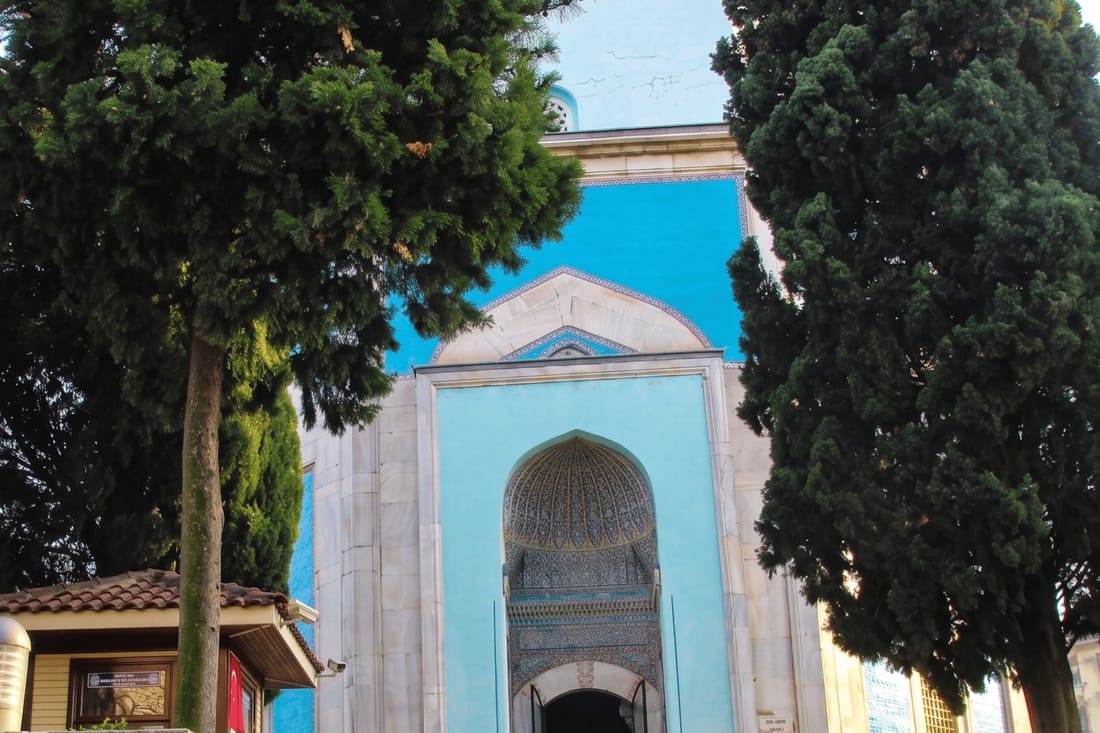
Yesil means green in Turkish. The word names the district, the mosque and the tomb. The Green Tomb takes its name from the green-blue tiles on its walls. Standing at the walls during an Ertugrul Ghazi tour from Istanbul brings those tiles into close range.
The tilework of the mosque uses green, blue, turquoise, white, yellow, light purple and dark purple. Walls, ceilings, vaults and the vaulted side halls called iwans are all tiled. The domes were first covered with blue and green tiles, but lead replaced them.
The front portal of the mosque is carved marble. Its tall recessed niche holds muqarnas, small niche-like forms that step out in rows. A half-dome crowns the door. Marble panels overlay the sandstone walls, and a large share of them were replaced in the nineteenth century. The carving shows an Ertugrul Ghazi tour from Istanbul early Ottoman stonework.
A vestibule at the entrance leads up a short staircase to the central prayer hall. Under the central dome stands an octagonal fountain of white marble, set in a pool. The building is a two-storey cube with an extension on the south side.
The mihrab, the prayer niche in the wall, is more than ten metres high. It has twelve rows of muqarnas and two ribbed columns. Its black-line tiles are glazed in blue, purple, white and yellow. An inscription above it credits the masters of Tabriz, so an Ertugrul Ghazi tour from Istanbul meets their name here.
The sultan’s loge, a private box for the ruler, sits on the second floor above the entrance. Its walls and ceiling carry gilded black-line tiles with motifs of stars and polygons.
Murad II, the son and successor of Mehmed I, had the tomb built after his father died. It stands among cypresses on top of the hill, higher than the rest of the complex. From there an Ertugrul Ghazi tour from Istanbul looks across at the mosque.
The wooden door of the tomb is joined without nails. An inscription on it names the woodworker, Haci Ali of Tabriz. Inside, hexagonal turquoise tiles with gilded rosettes line the walls up to about three metres. Mehmed’s sarcophagus rests on a platform. The tomb also holds his sons, his daughters and his nurse.
The madrasa lies south-west of the mosque and houses a museum of Turkish and Islamic art. An earthquake of the nineteenth century damaged the complex, and the architect Leon Parvillee led a restoration. Tiles from Kutahya replaced a large share of the tomb’s outer tiles. That repair belongs to the story an Ertugrul Ghazi tour from Istanbul passes through.
Which tombs of the sultans lie in the Muradiye complex for an Ertugrul Ghazi tour from Istanbul?
The Muradiye complex in Bursa holds twelve tombs, and the founder, Murad II, lies among them. One sultan, his family and later princes rest in a single garden. An Ertugrul Ghazi tour from Istanbul comes to it on the second day in Bursa.
Murad II began the complex in the early fifteenth century. The mosque was the first building to be finished. The municipality of Bursa calls it the last complex that Ottoman sultans built in the city. Beside the mosque stand a madrasa, a bath, a soup kitchen, a hospital and the tombs.
The burial ground holds twelve tombs, and the municipality counts the founder’s own tomb among them. Cypress trees shade the paths between the domed buildings. Within an Ertugrul Ghazi tour from Istanbul, this garden holds the family graves of the dynasty.
For more on Istanbul, see Iznik Nicaea Bursa Tour From Istanbul.
The tomb of Murad II stands in the centre of the complex, south-west of the mosque. It is very plain. The municipality links this to the sultan’s devotion to the afterlife and his dislike of show.
A wooden canopy carved in relief with star patterns covers the entrance. The dome above the grave is left open, so rain falls straight onto it. Murad II asked for this. He was the last Ottoman sultan to be buried in Bursa.
A side room of the same building holds the graves of his two elder sons and a daughter. The founder lies beside his children. Visitors who follow an Ertugrul Ghazi tour from Istanbul meet the family of the sultan here, in one small room.
The tomb of Huma Hatun, the mother of Mehmed II, stands east of the mosque. It dates from the middle of the fifteenth century. The building is hexagonal, with one window on each face. Its walls are cut stone and brick.
Princes lie in the garden too. One tomb of the late fifteenth century belongs to sons of Mehmed II. Cem Sultan, his youngest son, was buried there. Prince Mustafa, a son of Suleyman I, has a tomb of his own among the twelve.
Tiles link the garden to the mosque. The tomb of Prince Mustafa carries painted Iznik tiles of the sixteenth century. The other tombs have glazed tiles in more than one colour, mainly blue. Hexagonal tiles in turquoise decorate the mosque interior. Such tile work on an Ertugrul Ghazi tour from Istanbul shows how the court spent its wealth.
For an Ertugrul Ghazi tour from Istanbul, the mosque shows brick walls, a domed portico and four main domes. Its plan is an inverse T. A fire in the early eighteenth century damaged it, and the mihrab was rebuilt in the rococo style.
The madrasa lies west of the mosque. Student rooms surround a central courtyard, and a domed classroom closes the back. It served as a tuberculosis clinic in the middle of the twentieth century. After a restoration by the municipality, it houses a museum of Qur’an copies and manuscripts.
Ten madrasa rooms in the museum show the stages of writing the Qur’an in order, alongside the growth of calligraphy. The building is about six centuries old.
On the second day, This route visits Muradiye after the Green Mosque and Green Tomb, and before the citadel. This part of an Ertugrul Ghazi tour from Istanbul turns from the rise of the dynasty to its family graves.
What do the citadel and Irgandi Bridge give an Ertugrul Ghazi tour from Istanbul?
Walls on a hill and a bridge with shops show old Bursa on day two of this route. An Ertugrul Ghazi tour from Istanbul meets Bithynian walls, restored gates, Ottoman lanes and a bazaar on a bridge.
The citadel, called Hisar in Turkish, is the oldest part of Bursa. The Bithynians, the first founders of the city, built walls on natural rock outcrops here. The whole city once lay inside them, in today’s Hisar neighbourhood. Here the earliest layer of the city meets an Ertugrul Ghazi tour from Istanbul on its second day.
The walls were damaged in sieges and renovated in Roman, Byzantine and Ottoman times. Towers were added in the process. Haci Ivaz Pasha later repaired and strengthened them, after the attacks of Timur and the siege by Karamanoglu Mehmet Bey. The Osmangazi Municipality started the modern restoration of the walls.
Readers interested in Istanbul can open Istanbul Classical Tour From Izmir.
Gates with their own names pierce the walls. The Saltanat Gate, also called the Hisar Gate, is the main one. Passing through the Tahtakale Gate leads into a passage, not into the castle. From these gates an Ertugrul Ghazi tour from Istanbul can read the line of the old defences.
The Fetih Gate is the southern gate and opens towards the Pinarbasi area. It is also called the Water Gate. It was built to control and protect the water flowing from the Pinarbasi spring into the town. A barrel-vaulted water tower of two floors was built on its line.
The Zindan Gate is known in English as the Dungeon Gate. Sultan Mehmed Celebi built an angular tower in the Zindan section of the wall in the early fifteenth century. It survived with little damage. Dungeons have also come to light in the area.
Narrow lanes climb the hill inside the walls. Kavakli Avenue keeps traces of the grid street plan of the Hellenistic age and ends at the Yer Gate. On Kalebahce Street, homes are built into the old wall, and their doors open onto the stone. Here an Ertugrul Ghazi tour from Istanbul sees walls that double as the walls of homes.
Houses of the Ottoman age line the lanes, and the converted ones work as restaurants, shops and small hotels. The hill also gives panoramic views of the city in the valley below. A terrace on its north side looks towards the foothills of the mountain behind Bursa.
Irgandi Bridge crosses the Gokdere, a tributary of the Nilufer River. It joins the Osmangazi and Yildirim districts of Bursa. The merchant Muslihiddin commissioned it in the fifteenth century. The bridge has a single arch with a span of 16 metres, and its width is 11 metres.
Irgandi is a rare covered bridge that houses a bazaar. It is the only bazaar bridge built in the Ottoman Empire, and the first design placed shops on the span. The workshops sell handicrafts, from mother-of-pearl work to ceramics. That market adds a trading street over a stream to an Ertugrul Ghazi tour from Istanbul.
An earthquake in the nineteenth century damaged the bridge. It stayed closed to traffic until it was rebuilt, with minor changes, in the twentieth century. A later restoration, in the early twenty-first century, was the work of the Osmangazi Municipality. Walls above and a market below show what the old city adds to an Ertugrul Ghazi tour from Istanbul.
Why do skiers and hikers climb Uludag from an Ertugrul Ghazi tour from Istanbul?
Uludag is the highest mountain of the Marmara region, with a summit at 2,543 metres. A cable car climbs it from Bursa, skiers use its slopes in winter and hikers use its forests in summer. Beside an Ertugrul Ghazi tour from Istanbul, the mountain stands as an optional extra.
This route spends the second day in Bursa. Uludag stands above the city as a place near the route, not as one of its stops. The national park lies about 22 kilometres south of Bursa and is signposted from there. Adding it to an Ertugrul Ghazi tour from Istanbul means leaving the city sights for the slopes.
In Turkish, Uludag means great mountain. The name was Olympos in Greek and Olympus in Latin. The western end carried the name Mysian Olympus and the eastern end the Bithynian Olympus. The Turkish tourism ministry also gives Olympos Misios as its ancient name. The same ministry calls Uludag the highest mountain in Western Anatolia.
Uludag also has a monastic past. Throughout the Middle Ages the slopes held hermitages and monasteries. The Byzantine monk Saint Joannicius the Great lived on the mountain as a hermit. That religious past belongs to the mountain itself, beside the Ottoman story that an Ertugrul Ghazi tour from Istanbul follows.
Istanbul also features in Ankara Tour From Istanbul.
The cable car starts in Teferruc, in the Yildirim district of southern Bursa. The line stops on the alpine meadows of Kadiyayla. It goes on to Sarialan, a plateau whose name means yellow field. A rider who adds the lift to an Ertugrul Ghazi tour from Istanbul begins at the Teferruc station.
The mountain is also reached by car. The D575 winds south from Bursa for 22 kilometres to the national park gate at Karabelen. Weather on the mountain differs from the city. The higher a visitor goes, the colder, windier and wetter it gets. Strong wind, rain or fog can halt the cable car.
Uludag is a popular centre for winter sports such as skiing. The season centres on the months from late December to late March. Both cross-country and alpine skiing are on offer at the ski centre. That winter side belongs to the mountain. A skier on an Ertugrul Ghazi tour from Istanbul gets there only as a side trip.
Summer brings trekking and camping to the park, and hiking trails descend through beech forest to Bursa. The plant cover changes with height. Habitats run from oak savanna and lowland deciduous forest through mixed beech and fir forest to alpine meadows. Above 2,100 metres no trees grow.
The fir of these slopes is the Uludag fir, also called the Turkish fir. Its native range lies in north-western Turkey, on Uludag and other mountains southeast of the Sea of Marmara. It is a narrow, conical tree that reaches 20 to 30 metres when mature.
The dense fir forest holds short-toed treecreepers, common crossbills and Tengmalm’s owls. The park is also a refuge for mountain birds such as the lammergeier and other vultures. An abandoned wolfram mine stands near the summit.
The area has plenty to interest botanists. The park has rich flora, with alpine plants and endemic plants specific to Turkey and to Uludag. Glacial lakes lie near the peak, and the lakes dry out during the summer months. This natural side of Bursa contrasts with the Ottoman sights of an Ertugrul Ghazi tour from Istanbul.
What is life like in Cumalikizik for an Ertugrul Ghazi tour from Istanbul?
Cumalikizik is a village of 270 protected Ottoman houses on the slopes of Uludag, east of Bursa. Of them, 180 are still homes. Along the second day, an Ertugrul Ghazi tour from Istanbul reaches a living settlement.
Cumalikizik lies east of Bursa, at the foot of Mount Uludag. In administrative terms it is a neighbourhood of Yildirim, one of the city’s districts. The village has kept the texture of Ottoman residential architecture up to the present day. This route places it on the second day, in the Bursa area.
Cumalikizik began as a waqf village, so its income went to public institutions. The Kizik villages around Bursa are thought to date from the early fourteenth century. It was among the first places the Ottomans settled after moving into Bursa. Across an Ertugrul Ghazi tour from Istanbul, the village stands for the dynasty’s early age in wood and stone.
The name has two parts. Cuma means Friday, and kizik refers to the Oghuz settlers who founded the village. They founded seven Kizik villages, and five have survived. One tradition says people from neighbouring Kizik villages gathered here for the Friday prayer.
The village holds 270 historic houses, and all of them stand under protection. Of these, 180 still serve as dwellings, while others are under restoration. The houses rise two or three storeys, with the upper floors jutting out over the lanes.
Istanbul comes up again in Ephesus Sirince Tour by Flight From Istanbul.
The builders used timber frames, rubble stone and adobe. Chestnut and oak were the preferred woods. The gaps between the timbers were filled with brick or left bare, so the frame shows from the lane. An Ertugrul Ghazi tour from Istanbul can study the method from the street.
The floors suit the seasons. The middle floors have low ceilings for winter, and the upper floors have high ceilings for summer. A small courtyard called a hayat, a Turkish word meaning life, belongs to the house. For privacy, the ground floors have no windows, and screened windows above look onto the side lanes.
The lanes are cobbled and very narrow, with no pavements. In places they narrow to only 60 centimetres. Large stones run down the middle of the street, and a gutter there carries rainwater away. Smaller stones lie near the houses and help to drain the rain.
The village square is the trading centre, and the mosque stands there with a single minaret. It dates from the late fourteenth century. After the city’s large mosques, an Ertugrul Ghazi tour from Istanbul finds a village mosque here. The Zekiye Hatun Fountain and the Cumalikizik Bath are other old buildings.
Cumalikizik forms one component of the UNESCO World Heritage site that pairs the city of Bursa with this village. Its well-preserved architecture makes it a film setting for Turkish historical television and cinema. The lanes seen on screen are real ones, and an Ertugrul Ghazi tour from Istanbul walks them.
Village women make products at home and sell them to visitors. Their stalls stand in front of the houses and in the courtyards. They offer hand-made noodles, manti, jams and pickles, plus knitted socks. Raspberries are the symbol of the village, and a raspberry festival marks them in June.
Weekends in the tourist season bring the largest crowds into the narrow lanes. Historic houses also work as pensions and breakfast cafes. Traditional ways of life are still kept in Cumalikizik, and an Ertugrul Ghazi tour from Istanbul walks through them.
Which sweets and snacks of Bursa finish an Ertugrul Ghazi tour from Istanbul?
Candied chestnut, tahinli pide, a cheese dessert and the Bursa peach round off an Ertugrul Ghazi tour from Istanbul. Towels and silk scarves are the two Bursa crafts to look for beside these tastes.
This route spends its second day in Bursa, then takes the road back to Istanbul. The foods below belong to the city and are not fixed stops of an Ertugrul Ghazi tour from Istanbul. All of them are Bursa products that a visitor can still look for before the road home begins.
Kestane sekeri, or chestnut candy, is a speciality of Bursa. It is the first sweet to try once an Ertugrul Ghazi tour from Istanbul enters the city. Makers peel the chestnuts and cook them slowly in syrup. The sweet is ready to serve after it rests for a day.
Shelled chestnuts boil in thin cheesecloth, then the sweet syrup is added. The finished candy is amber-yellow, with no caramelised look and a high fruit ratio. Bursa has made it for more than a century, particularly around the historic confectioners’ bazaar of the city. Patisseries in the centre of Bursa also sell the candy.
The nuts come from chestnut trees on the foothills of Uludag. Harvest begins every year in the second week of September, and thousands of people collect the chestnuts. The name Bursa Kestane Sekeri is registered in the European Union. Officials call the candy a keeper of the craftsmanship tradition of Bursa.
A related page on Istanbul: Istanbul Classical Tour From Ankara.
Planning an Ertugrul Ghazi tour from Istanbul for summer matches the Bursa peach, a favourite summer fruit. The name Bursa Seftalisi covers two varieties, J.H. Hale and Glohaven. Both are medium-sized, with a loose pit, yellow skin with a red blush, and sweet, juicy yellow flesh.
Growers raise these peaches in nine districts and villages of Bursa province. The soil and climate of the region suit the fruit. The European Union gives the name protected designation of origin status, the first for a peach from Turkey. That status keeps the name and the traditional growing methods in place.
Tahinli pide is a sesame-paste flatbread that ties an Ertugrul Ghazi tour from Istanbul with the Ottoman kitchen. Bakers spread tahini mixed with sugar on yeast dough. The pide bakes in a medium oven until the tops turn golden. It is a popular dish on breakfast tables in Bursa, and the name Bursa Tahinli Pide is registered.
Milk halva is made by roasting butter and flour before combining them with milk and sugar. Kemal Pasha dessert comes from the district of Mustafakemalpasa. Small balls of dough, made with flour, unsalted cheese, semolina and egg, are fried and boiled in syrup. Kaymak goes with it in winter, ice cream in summer.
Towels are the first craft of Bursa to know on an Ertugrul Ghazi tour from Istanbul. They are woven from cotton yarn on traditional hand looms, called kara tezgah, or on semi-automatic and automatic looms. The pile stands on both surfaces. The registered name is limited to towels produced within Bursa province.
Silk scarves are the second craft. In one Bursa workshop, the outline of a design is printed on plain silk in gold or silver. The silk is cut into squares or rectangles and stretched on metal frames. Workers paint it by hand, with sponges for wide areas of colour and brushes for fine work.
What does the Turkish drama series get from history on an Ertugrul Ghazi tour from Istanbul?
The drama takes its hero and its setting from early Ottoman history, then fills the gaps with invention. Its first season was filmed on built sets in Istanbul. Someone taking an Ertugrul Ghazi tour from Istanbul visits the real places, while the screen story stays a story.
Two television dramas are meant here. The first follows Ertugrul, leader of the Kayi tribe, through warfare and shifting alliances across five seasons. Abroad it is known as Resurrection: Ertugrul. Its sequel follows his son Osman and is based on Osman I, who founded the dynasty. Both are historical fiction.
The producer has said that historical records from the period are scarce. Historians rely on stories that Ottoman writers set down more than a century after the events. Only one point stays firm: Ertugrul was the father of Osman. This gap explains why an Ertugrul Ghazi tour from Istanbul rests on places, not scenes.
In history, Baiju Noyan, who made the Anatolian Seljuks dependent on the Mongols, had no contact with the Kayi. The series has him fight them. The screen meeting of Ertugrul and Ibn Arabi draws criticism because of the large age gap between the two men. The Crusader threat is seen as exaggerated next to the Mongol one.
Other names come from outside the chronicles. Artuk Bey, a commander shown beside Ertugrul, died almost a century before Ertugrul was born. Bamsi, a loved character of the series, is a legendary figure from Turkish folklore.
More about Istanbul: Cappadocia Tour From Istanbul.
The first season was filmed around Beykoz and Riva in Istanbul. Riva is a coastal village on the Asian side of the city, between Anadolu Feneri and Sile. There a plateau of 40,000 square metres went up, with 35 tents built to match originals.
The first season used a second site as well. A factory in Beykoz held the interiors of an Aleppo palace, with guest rooms, corridors and dungeons. Horses had a base too. The set held 25 of them, attended by a veterinarian, and a horse farm in Riva kept them.
The Riva sets have been turned into a visitor attraction. Among the buildings are a built Inegol Castle and a built Sogut. Kayi tribe sections let visitors try costumes and horse riding. This route makes no stop at Riva. The sets remain a separate visit from an Ertugrul Ghazi tour from Istanbul.
These are stage copies, not the original sites. The real Sogut lies in the Sogut district of Bilecik province, where the tomb stands. For anyone choosing an Ertugrul Ghazi tour from Istanbul, the first day reaches that town.
The series changed who visits Sogut. A curator at the tomb told a reporter that visitors say they watched the serial and then decided to come. Another report says interest in the first Ottoman capital rose sharply after the release.
The drama found viewers abroad, and visitors to the district have come from Pakistan, Afghanistan and Saudi Arabia. Anyone joining an Ertugrul Ghazi tour from Istanbul arrives in a town that the screen made known to the world.
Osman I is the clearest link between drama and record. The sequel is based on him, and the chronicles name him as the founder of the dynasty. For any scene beyond that, a chronicle has to back it before it counts as history. On an Ertugrul Ghazi tour from Istanbul, that rule keeps the facts and the plots apart.
What manners suit the tombs and mosques of an Ertugrul Ghazi tour from Istanbul?
Shoes come off before the carpeted prayer hall, shoulders and knees stay covered, and women cover the hair. Voices drop in tomb rooms. Plan an Ertugrul Ghazi tour from Istanbul around the five daily prayers. Visitor access can pause while worshippers pray.
Shoes stay out of the carpeted prayer hall, and clean socks make the stop easier. Where a shelf is provided, shoes go on it; otherwise visitors carry them. At the Green Mosque in Bursa, marble cubby-holes line the short staircase between the vestibule and the prayer hall.
Dress rules are short. Men wear trousers and a shirt with sleeves. Women cover shoulders and legs below the knee, and a scarf covers the hair before they enter the prayer space. A light scarf in the daypack settles the question early on an Ertugrul Ghazi tour from Istanbul.
Men need no head covering. A hooded jacket can stand in for a scarf: raise the hood at the door. Coverings are sometimes lent at the entrance, but availability and style vary. A scarf from home is the safer choice. Beachwear and sports vests are poor choices in a mosque.
Five prayers mark the day, and each time follows the position of the sun. The Presidency of Religious Affairs publishes the times for Turkish provinces and their districts, based on astronomical calculations. Read the same-day table before stepping into a mosque on an Ertugrul Ghazi tour from Istanbul. Visitor access can pause before and during the prayers.
Readers interested in Istanbul can open Bodrum Kos Tour From Istanbul.
Friday calls for the greatest care when sightseeing in a working mosque. The weekly congregational prayer replaces the midday prayer, and a sermon comes before it. Late morning to early afternoon belongs to that service, so visits wait for another hour or another day.
Worshippers pray on the carpet, so nobody walks in front of them; walk behind. Voices stay low, steps stay slow and phones stay silent. Eating belongs outside the prayer area. When unsure where to step, wait for the staff to point the way.
A turbe is a Muslim mausoleum, and it is a place of prayer as well as a monument. People visit a turbe to pray and to ask the deceased for help. A tomb room on an Ertugrul Ghazi tour from Istanbul therefore asks for the same calm as a mosque. Outside, nobody steps on a grave, and mourners get space.
Photography follows the mood of the room. Courtyards are fine to photograph. Inside, the rule depends on the mosque, the hour and the crowd, so ask first when in doubt. Switch the flash off, and do not photograph people at prayer. Ask before taking anyone’s portrait on an Ertugrul Ghazi tour from Istanbul.
Where a mosque marks a visitors’ section, stay inside it. Elsewhere, men and women keep to the areas open to them. The women’s part can sit behind a screen or on an upper balcony. Signs read Bayan for women and Bay for men.
Access to historic buildings differs from site to site. Such buildings are costly to modify, and only a part of the prime sights are adapted. The Presidency of Religious Affairs has fitted wheelchair lifts and altered entrances in a part of the country’s mosques. Ask at the door before climbing, and check ahead for an Ertugrul Ghazi tour from Istanbul.